
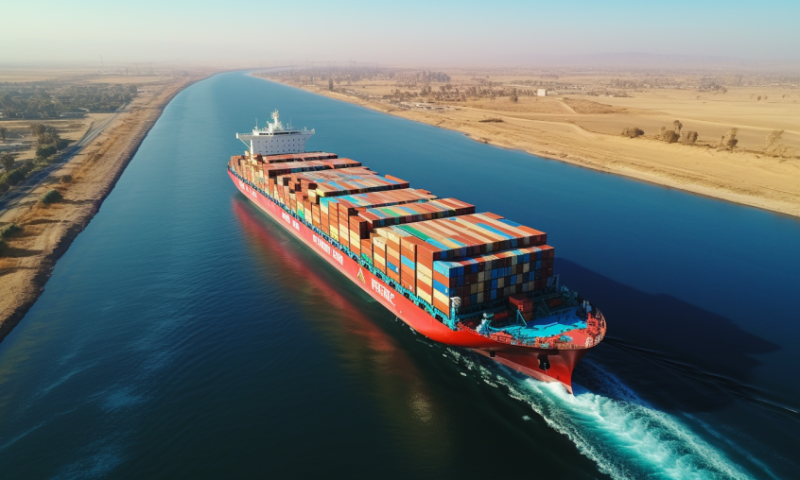
Shippers are facing continued uncertainty over transits through the Suez Canal and the Red Sea, as security concerns and operational risks complicate decisions on key international shipping routes.
The Suez Canal is a major maritime corridor connecting the Mediterranean Sea with the Red Sea, providing a shorter route between Asia and Europe. Disruptions in the region can prompt shipping lines to reassess voyage plans, transit schedules and the risks associated with operating through the area.
For cargo owners and freight forwarders, uncertainty over route safety can make supply chain planning more challenging. Changes in vessel routing may affect transit times, freight costs, delivery schedules and the availability of shipping capacity.
Some carriers may consider rerouting vessels around the Cape of Good Hope when security conditions or risk assessments make Red Sea transits less attractive. Although this alternative can reduce exposure to certain regional risks, it typically adds sailing distance and can increase fuel consumption, voyage duration and operating expenses.
These changes can also affect container availability and vessel scheduling across wider trade networks. Longer voyages may disrupt sailing rotations and delay the return of containers to export markets, creating additional challenges for shippers.
The main concern for shippers is not only the security situation but also the uncertainty surrounding carriers’ routing decisions. According to industry commentary reported by The Loadstar, sudden changes between Suez and Cape routes can create difficulties for cargo owners whose insurance arrangements do not automatically cover Red Sea transits.
War-risk insurance premiums and additional carrier surcharges are also influencing route economics. Although Suez transits can shorten voyages, insurance expenses and other risk-related costs may reduce the financial advantage compared with sailing around Africa.
Shippers are therefore seeking greater consistency, advance notice and transparency from carriers when selecting routes. Clear communication on transit plans, insurance coverage and additional charges will remain important for managing supply chain risks.
As shipping lines continue to assess their options, businesses moving cargo between Asia and Europe will need to monitor security developments and carrier advisories closely.