
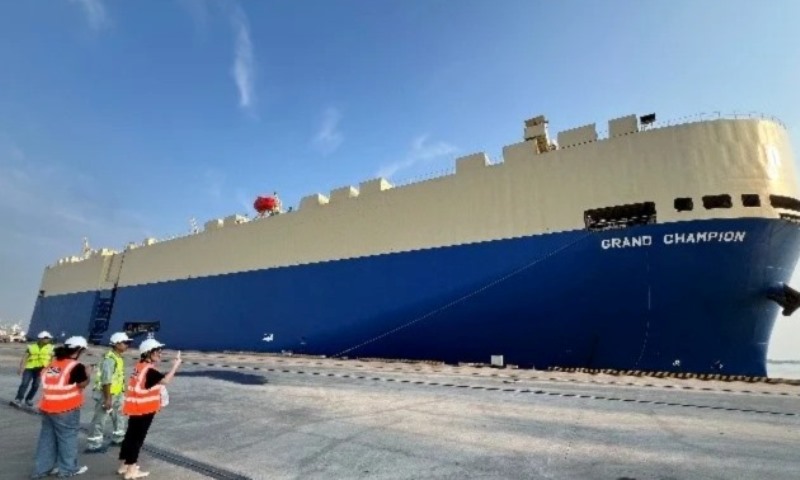
China is seeking more and larger car-carrier vessels to support rising vehicle exports, as automakers expand their presence in international markets and demand greater shipping capacity to transport vehicles overseas.
The growth of China’s automotive exports, including electric vehicles and conventional passenger cars, is increasing the importance of specialised maritime transport. Dedicated car carriers, also known as pure car and truck carriers (PCTCs), are designed to move large numbers of vehicles safely and efficiently between manufacturing hubs and overseas destinations.
As export volumes increase, access to suitable vessel capacity has become an important consideration for Chinese automakers and shipping operators. Larger vessels can carry more vehicles per voyage, potentially improving transport efficiency and reducing the average shipping cost per unit when operating at high utilisation levels.
China’s expanding electric vehicle industry is also contributing to changing vehicle shipping requirements. Automakers are targeting markets across Europe, Southeast Asia, the Middle East, Latin America and other regions, increasing the need for reliable international logistics networks.
The expansion of car-carrier capacity reflects a wider shift in the automotive shipping market, where manufacturers and logistics providers are working to align maritime transport with changing production and export patterns. Vessel availability, port infrastructure and loading facilities remain important factors in managing growing vehicle flows.
However, increasing the supply of specialised ships requires substantial investment and long lead times for construction. Shipping companies must also consider future demand, vessel operating costs and the risk of excess capacity as market conditions change.
China’s push for additional and larger car carriers highlights the growing link between automotive export growth and maritime logistics. The availability of sufficient vessel capacity will be an important factor in supporting the country’s ambitions in global vehicle markets.