
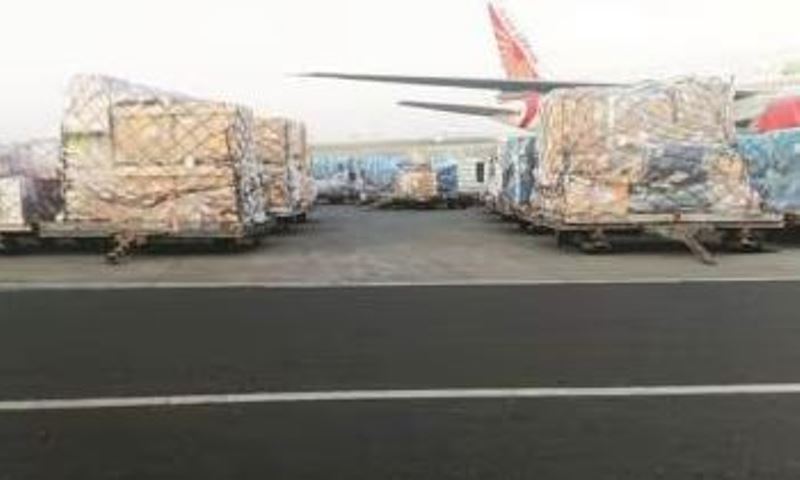
Airfreight demand across Africa is gaining momentum as disruptions to ocean shipping services in the Middle East force businesses to seek faster alternatives for moving goods. The shift is creating new opportunities for air cargo operators, although industry experts remain uncertain whether the current growth will translate into long-term market expansion.
According to media, the disruption to sea freight has made airfreight and express delivery services essential alternatives for businesses seeking to maintain supply chain continuity. Hennie Heymans, CEO of DHL Express’s Sub-Saharan Africa operations, said cargo owners were increasingly turning to air transport when maritime services became unreliable.
DHL Expands Heavy Cargo Capabilities
The rise in demand coincides with DHL Express’s launch of its Heavy Weight Express service, which allows customers to ship consignments weighing up to 3,000 kg, with individual pieces weighing up to 1,000 kg.
The service expands the range of shipments that can move through express air networks, offering businesses an alternative for heavier goods that might otherwise travel by sea. It also positions logistics providers to respond to changing transport requirements as disruptions affect established maritime routes.
Supply Chain Disruptions Reshape Cargo Flows
The shift highlights the close relationship between ocean freight and air cargo markets. When sea routes face delays, service suspensions or uncertainty, companies handling time-sensitive shipments may switch to air transport to reduce delivery delays and protect business continuity.
African importers and exporters could benefit from greater access to air cargo services, particularly for urgent, high-value and time-sensitive consignments. However, the switch can also increase transportation costs, making airfreight less suitable for low-value or bulky goods.
Long-Term Growth Remains Uncertain
Despite the current increase in demand, freight forwarders remain cautious about whether the disruption will produce lasting structural growth in Africa’s air cargo market. Some of the additional volumes may return to ocean shipping once services stabilise and maritime routes become more reliable.
For airlines and logistics companies, the immediate challenge is to accommodate shifting cargo flows while balancing capacity, operating costs and service reliability.
The current trend demonstrates how disruption in one transport mode can reshape demand across the wider logistics industry. Whether Africa’s airfreight boom becomes a sustained growth driver will depend on the recovery of ocean shipping services, future trade demand and the competitiveness of air cargo operations.