
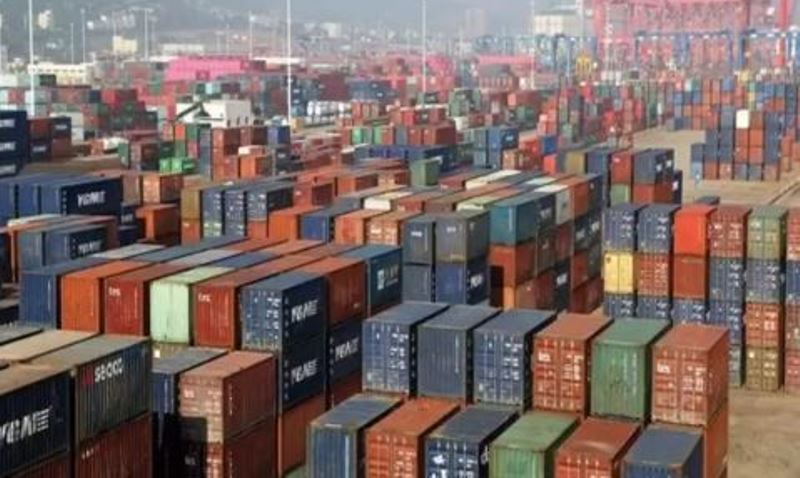
Containers stranded on key shipping lanes between Asia and the Middle East are increasingly being diverted to ports in India as carriers seek to manage disruptions triggered by regional tensions and operational uncertainty.
Shipping industry sources say several container lines are exploring options to temporarily offload cargo at Indian ports rather than holding containers on vessels or rerouting them directly to affected destinations in the Gulf. The move is aimed at easing congestion on ships and maintaining schedule reliability on major trade routes.
Major container gateways such as Jawaharlal Nehru Port and Mundra Port are being considered as potential offloading points because of their capacity and connectivity to regional logistics networks.
Industry observers say that geopolitical tensions in West Asia have forced shipping lines to reassess routing and port call strategies. Delays, increased security risks and higher war-risk insurance premiums have complicated direct services to some Gulf destinations, leaving containers temporarily stranded on vessels operating along the Asia–Middle East corridor.
By unloading cargo at Indian ports, carriers can free up vessel space and allow containers to be forwarded later once conditions stabilise. However, logistics providers caution that this could create additional handling and storage pressures at Indian terminals if the volume of diverted containers rises significantly.
Port operators and shipping agents are closely monitoring the situation, as sustained disruptions could reshape short-term cargo flows in the region and increase the role of Indian ports as temporary relief hubs for international container traffic.