
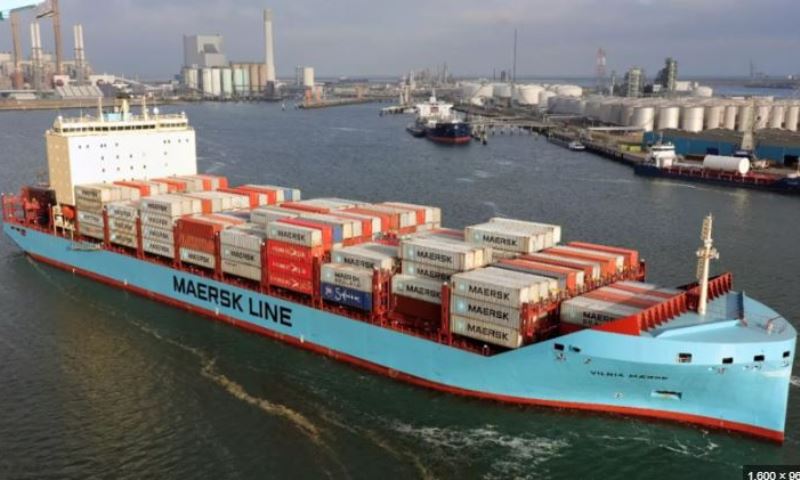
A.P. Moller – Maersk has announced the rerouting of selected Middle East services, including sailings under its ME11 and MECL strings, as operational constraints in the Red Sea and Suez corridor continue to disrupt normal transit patterns.
The carrier said certain voyages will temporarily bypass the Suez Canal, with vessels instead taking alternative routes to safeguard crew safety and maintain schedule reliability. The adjustments are aimed at minimising delays and mitigating the impact of ongoing regional instability on supply chains.
Maersk noted that the changes may lead to extended transit times and revised port rotation schedules for affected services. Customers have been advised of updated estimated arrival times and contingency plans, including potential equipment repositioning measures to reduce disruptions.
The Red Sea has remained a challenging corridor for global shipping, prompting several carriers to reassess routing strategies in recent months. Industry analysts say prolonged diversions could add voyage time and increase operating costs, with ripple effects on freight rates and vessel availability.
Maersk stated it will continue to monitor the security situation and adjust operations as necessary to ensure safe and reliable service delivery across its Middle East–Europe network.