
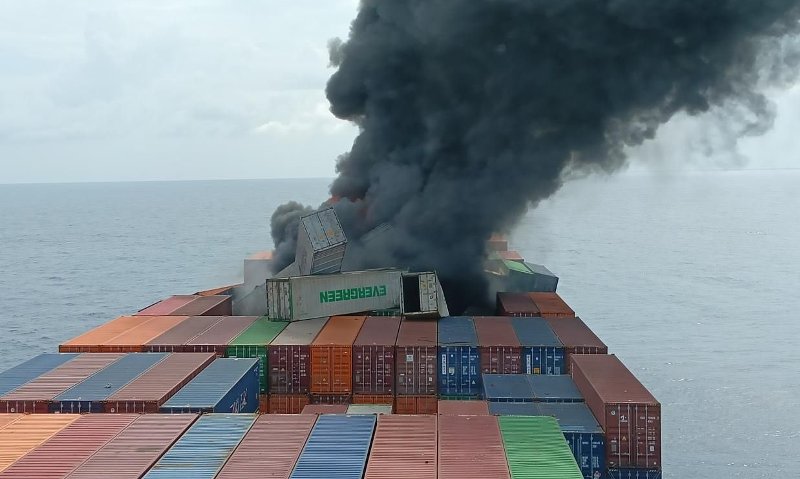
Commercial shipping faced fresh security threats in the Middle East after the United States disabled a containership in the Gulf of Oman, while a separate Houthi attack on a cargo vessel in the Bab el-Mandeb Strait killed six people. The incidents highlight the continuing risks for vessels operating along key maritime routes connecting the Gulf, Red Sea and Indian Ocean.
US strikes Panama-flagged containership
The US Central Command said a Navy MH-60 helicopter fired two Hellfire missiles at the Panama-flagged Vela Nova after its crew allegedly ignored repeated warnings and continued towards an Iranian port in violation of a US blockade.
The strike disabled the vessel’s steering gear, preventing it from continuing towards Iran. The ship was reportedly struck about 71 nautical miles from Pakistan while sailing west through international waters in the Gulf of Oman. A fire in the stern and steering area was extinguished, and all crew members were reported safe.
US Central Command said it had redirected 55 commercial vessels, disabled three vessels and boarded two since reimposing its blockade of Iranian ports in July.
Six killed in Bab el-Mandeb attack
In a separate incident, the Egyptian-owned cargo vessel Tihamah came under attack while operating near the Bab el-Mandeb Strait off Yemen.
Yemeni authorities said four crew members and two rescuers were killed. The crew fatalities included three Pakistani nationals and one Indonesian national. Ten other people were reportedly injured in the attacks.
The Houthis later claimed responsibility for attacking a vessel carrying what they described as Saudi military equipment, although they did not initially identify the ship by name. Yemeni authorities attributed the attack to the Houthi movement.
Shipping routes face renewed pressure
The incidents add to mounting uncertainty for shipping companies operating around the Red Sea, Bab el-Mandeb and Gulf of Oman. Vessel traffic through the Bab el-Mandeb has already fallen significantly amid the security situation, with recent traffic averaging about 32 vessels per day compared with around 50 before the latest blockade.
For carriers and cargo owners, the renewed attacks could lead to additional route diversions, higher insurance costs, longer transit times and increased security precautions.
The simultaneous incidents in the Gulf of Oman and Bab el-Mandeb underline the widening security challenges facing commercial shipping across the region and could further complicate efforts by carriers to restore normal operations through the Red Sea corridor.