
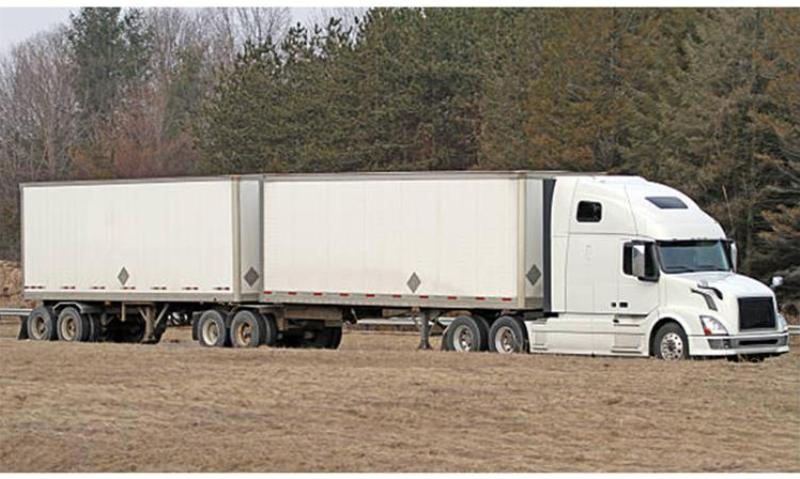
ZF, the world’s third-largest automotive supplier, is conducting trials with Indian original equipment manufacturers (OEMs) to explore hauling two trailers with a single tractor, leveraging improvements in the country’s road infrastructure.
Currently, Indian regulations typically limit trucks to a single trailer. This new approach, if successful and approved by regulators, could significantly improve efficiency in the transportation sector, potentially lowering logistical costs and reducing delivery times.
On the sidelines of the Bharat Mobility Expo, P Kaniappan, Managing Director, ZF Commercial Vehicle Control Systems India said, “Road trials are on with some OEMs on road train projects. The express highway infrastructure is improving in India, so people are experimenting with carrying two trailers on one tractor. Currently, one tractor carries only one trailer. In the future, one tractor will carry two trailers, thereby reducing the logistic costs for the transporters. For that, the company is pushing its intelligent trailer solutions to support those road train projects.” He asserted that ZF is the largest commercial vehicle solutions provider in India.
In layman’s language, a road train, also known as a long combination vehicle (LCV), isn’t exactly a standard vehicle in the automobile industry. It’s more specific to freight hauling and operates differently from standard trucks.
The developments should be seen in the context of the Indian government’s setting a target of bringing down the average cost of logistics to about 9% by the end of 2024 from about 16% of the country’s GDP at present.
As per the company’s top executive, ZF has been pursuing the strategy of e-mobility in the commercial vehicle space. During the recently held Bharat Mobility Expo 2024, the company showcased some of its key products for the commercial vehicle segment, which included the EscSmart, an electronic stability control system designed to enhance vehicle safety and stability. The Hydraulic ESC, OnGuard Max 1.0, Electronic Braking Systems, E-comp, E-vacuum Pump, T-EBS, Fleet Management Solutions, Traxon, and ReAx, among others.
Kaniappan further stated that the CV industry is currently witnessing two major trends. One is that buses and smaller commercial vehicles are increasingly drifting towards electric mobility. Secondly, the truck segment is witnessing a rise in the average number of distances covered per day. “Some of the fleets are doing about 700–800 km per day, a far cry from the 250–300 km done earlier. That is why many of the fleets are focusing on reliability as a major factor and also on the total cost of ownership. In that respect, people are going for higher engine power and better transmissions, among others,” he said.
Akash Passey, President, ZF Group India, said, “Logistics companies in India are increasing the number of kilometres travelled per day by trucks, creating demand for more reliable and efficient commercial vehicles.”