
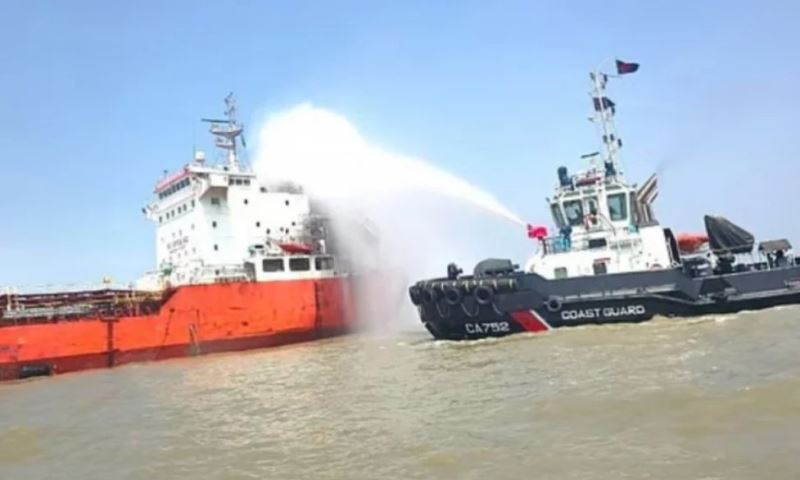
A fire onboard a product tanker anchored outside Chattogram Port has renewed focus on maritime safety risks and operational pressures at one of South Asia’s busiest trade gateways. All 22 crew members were safely evacuated, and no casualties have been reported.
The incident occurred while the vessel was awaiting berth allocation at anchorage, underscoring concerns over prolonged waiting times and congestion challenges at Chattogram Port, which handles the majority of Bangladesh’s international trade. Rising cargo volumes and infrastructure limitations have increasingly placed pressure on port operations, raising the importance of maintaining stringent safety standards.
Industry observers note that the regional tanker sector continues to face challenges linked to aging vessels, maintenance requirements, and compliance with evolving safety regulations. The fire serves as a reminder of the risks associated with handling petroleum products and hazardous cargoes in busy maritime environments.
The incident has also highlighted the critical role of emergency preparedness, vessel monitoring, and coordinated response mechanisms in minimizing potential damage and safeguarding lives. Maritime experts emphasize that investments in port infrastructure, digital traffic management systems, and enhanced safety oversight will be essential to support growing trade volumes while reducing operational risks.
As global supply chains become increasingly interconnected, strengthening maritime safety and improving port resilience remain key priorities for ensuring uninterrupted trade flows and protecting critical logistics networks across the region.