
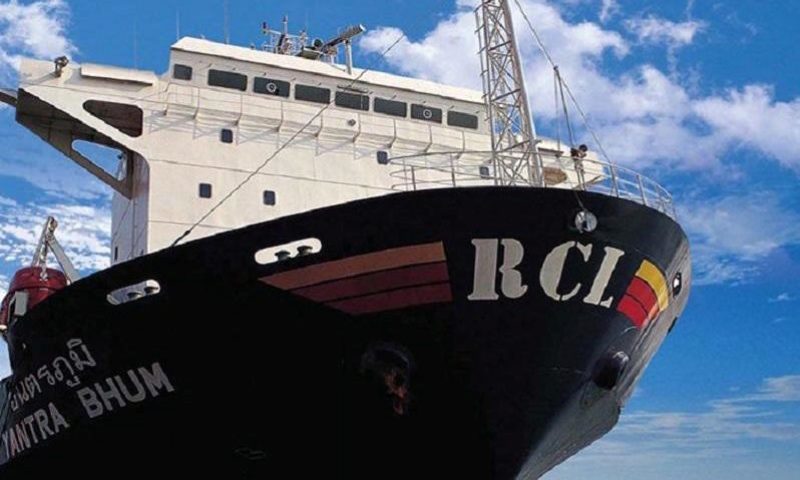
Major container carriers are restructuring their Myanmar service networks by merging loops and reducing sailing frequencies as part of efforts to optimise capacity across Southeast Asia’s feeder trades.
According to maritime analytics firm DynaLiners, the changes involve consolidation of existing services and revised port rotations linking Singapore, Malaysia, Indonesia and Myanmar.
CMA CGM, through its CNC Line, has merged its IDLW, YCX and YSX services—previously operated in cooperation with Cosco Shipping Lines and Regional Container Lines—into a newly branded BY8 service.
The BY8 loop will operate on the rotation: Singapore – Yangon – Singapore – Port Kelang – Belawan – Singapore, maintaining connectivity between key transshipment hubs and Myanmar while streamlining vessel deployment.
Following their withdrawal from the YSX service, Cosco Shipping Lines and Regional Container Lines have also revised their joint SYM1/RSY service by dropping the Port Kelang–Yangon leg. The service will now run as a Singapore–Yangon–Singapore shuttle with two 1,200 TEU vessels at a reduced frequency of one sailing every 10 days.
Separately, Cosco Shipping Lines will continue to provide Port Kelang–Yangon coverage through a revamped standalone SYM3 service. The weekly loop, operated with two 1,000 TEU vessels, follows the rotation: Singapore – Port Kelang – Yangon – Belawan – Singapore.
The adjustments reflect broader efforts by carriers to recalibrate capacity in response to fluctuating regional demand, with potential implications for cargo routed via Southeast Asian hubs serving the India–Myanmar trade corridor.