
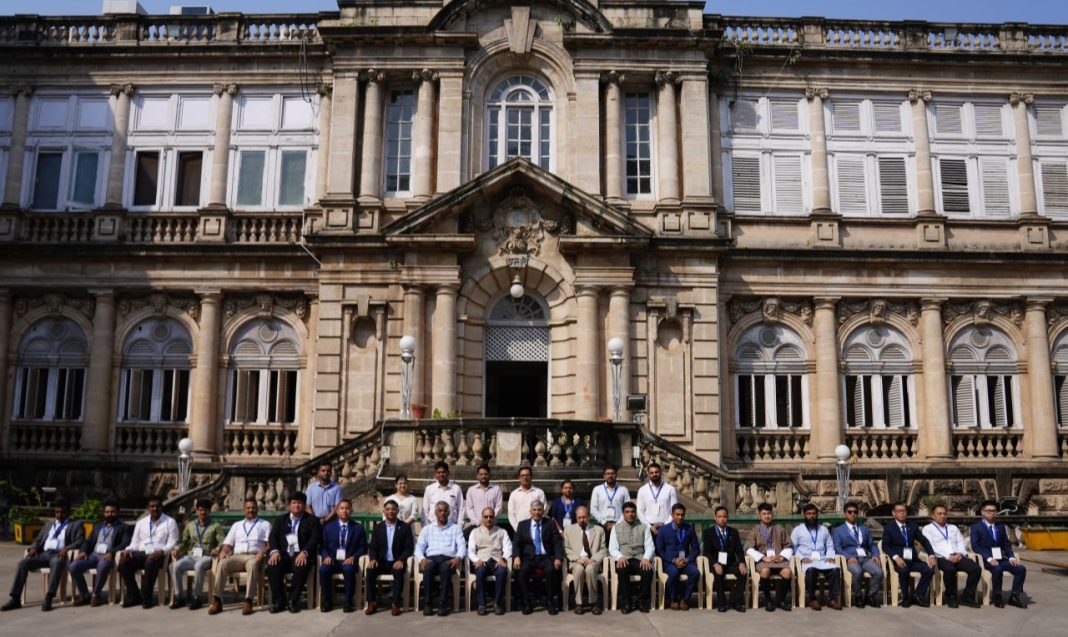
Gati Shakti Vishwavidyalaya (GSV), in collaboration with the Asian Institute of Transport Development (AITD), has commenced the 38th Regional Cooperation Training Course on “Digitalization and Decarbonisation: Pathways to Sustainable Transportation.” The programme, scheduled from October 26 to November 6, 2026, brings together 15 participants from Bangladesh, Bhutan, India, Indonesia, Myanmar, Sri Lanka, Thailand and Vietnam.
The training programme focuses on the role of digital technologies, energy efficiency and regional cooperation in developing sustainable transportation systems.
Prof. (Dr.) Alok Tyagi, Professor of Practice and Programme Director, highlighted the need to balance technological advancement with environmental protection, emphasising the importance of integrating sustainability into the development of transportation infrastructure and services.
Prof. Pradeep Kumar Garg, Dean of Executive and Continuing Education at GSV, stressed the need for energy-efficient transport systems. He underlined the importance of meticulous multimodal transport planning and dynamic traffic management to reduce urban congestion, curb pollution and promote sustainable development.
Prof. (Dr.) Manoj Choudhary, Vice Chancellor of GSV, highlighted the growing role of digital technologies and artificial intelligence in transforming transportation and logistics. Referring to digital initiatives such as FASTag, he emphasised the importance of technology-enabled monitoring and agile infrastructure management. He also noted that wider adoption of automation is essential to optimise the movement of goods and passengers.
Shri B. N. Puri, Director of AITD, underscored regional cooperation, policy learning and institutional capacity building as key pillars of sustainable development.
Dr. Abhilasha Saksena, Programme Coordinator, concluded the inaugural session with an overview of the training curriculum.
The programme is expected to provide a platform for participants from across the region to exchange knowledge and experiences on digitalisation, decarbonisation and sustainable transport practices, supporting stronger regional cooperation and the development of more efficient and environmentally responsible transportation systems.