
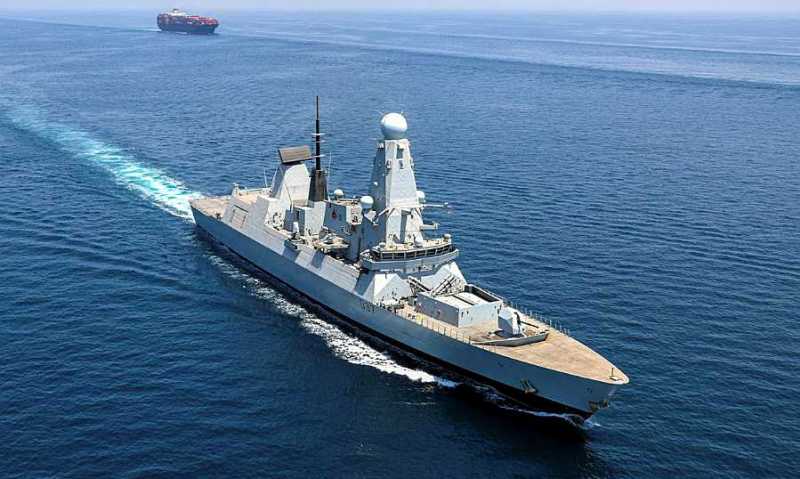
As tensions in the Persian Gulf spill over into the Bab el-Mandeb, the Indian Navy has stepped up its presence in the strategically important waterway by escorting merchant vessels through the troubled waters.
Two Indian naval ships — the Talwar-class guided missile frigate INS Trishul and the Aditya-class replenishment and repair ship INS Aditya — have been deployed for the mission. The vessels recently escorted MT Compass, an Indian-flagged vessel bound for Mumbai, and MT Thalatta, a Liberian-flagged ship sailing towards the Suez Canal.
The Indian Navy said it remains committed to ensuring the safe transit of vital energy cargo and protecting India’s maritime interests amid growing security concerns across the region.
The Navy has maintained anti-piracy patrols in the Gulf of Aden since October 2008, with at least one warship deployed continuously in the area. Its maritime security operations have not been restricted to Indian-flagged vessels, with ships from other countries also receiving protection when required.
At present, INS Trishul is maintaining the operational naval presence, while INS Aditya is providing logistics and replenishment support. The Indian Navy also has access to Oman’s Duqm port, which provides an important logistical facility for its deployments in the western Indian Ocean.
Operation Sankalp expands India’s maritime security role
The Navy’s wider maritime security operations in the western Arabian Sea are being conducted under Operation Sankalp, launched in June 2019 following heightened tensions around the Strait of Hormuz.
The operation was initially conceived to safeguard the passage of Indian-flagged vessels through one of the world’s most strategically sensitive maritime chokepoints. Over the years, it has evolved into a broader component of India’s maritime security architecture across the Indian Ocean Region.
Operation Sankalp is implemented through close coordination between multiple government agencies, including the Ministry of External Affairs, Ministry of Ports, Shipping and Waterways, Ministry of Petroleum and Natural Gas and the Directorate General of Shipping. This inter-agency coordination enables the Navy to respond rapidly to emerging threats and disruptions affecting commercial shipping and energy supplies.
India’s expanding maritime security role was demonstrated in December 2023, when Indian Navy MARCOS, working with the Indian Air Force, helped secure the release of the merchant vessel MV Ruen after it was hijacked by Somali pirates.
IFC-IOR strengthens maritime domain awareness
Supporting India’s maritime security operations from the Strait of Malacca to the Bab el-Mandeb is the Gurugram-based Information Fusion Centre–Indian Ocean Region (IFC-IOR).
The centre serves as a hub for maritime information exchange, drawing on inputs from multiple sources, including satellite-based surveillance and other maritime sensors. By integrating information and facilitating real-time coordination among regional partners, the IFC-IOR has strengthened India’s maritime domain awareness and ability to track developments across the wider Indian Ocean.
With geopolitical tensions continuing to affect key shipping corridors, India’s sustained naval presence and maritime information-sharing capabilities are becoming increasingly important for safeguarding commercial shipping, energy flows and the country’s broader maritime interests.