
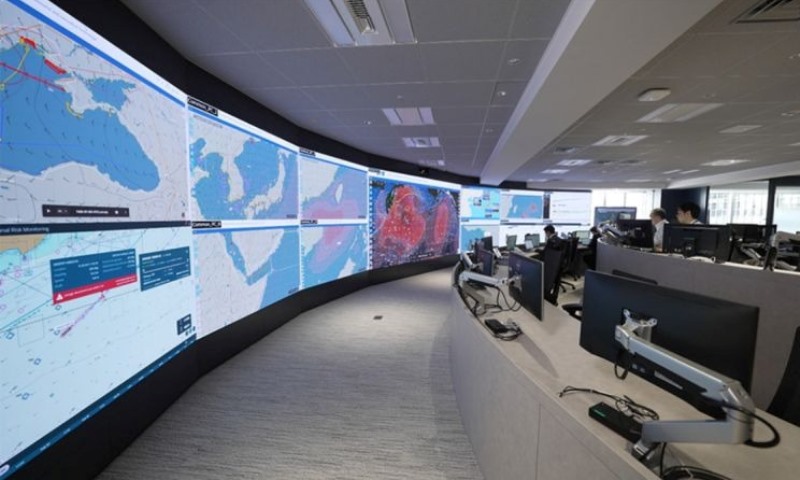
In a significant step towards digitalizing ship operations, Mitsui O.S.K. Lines (MOL) and IBM Japan Ltd. have jointly launched an artificial intelligence (AI)-powered operational support platform designed to improve decision-making, strengthen navigational safety, and enhance operational efficiency across the company’s global fleet.
The platform, which became operational on July 1, has been deployed at MOL’s Safety Operation Supporting Center (SOSC), where it consolidates critical operational data—including weather and ocean conditions, vessel navigation information, and geopolitical developments—into a single interface. By replacing fragmented information sources with a unified system, the platform enables operators to assess evolving situations more quickly and respond to potential risks with greater accuracy.
As the maritime industry faces increasingly complex operational challenges, the new AI platform is expected to significantly improve situational awareness, helping shore-based personnel make faster and more informed decisions to support vessels worldwide.
The solution was jointly developed by combining the operational expertise of MOL’s SOSC, the AI capabilities of MOL INFORMATION TECHNOLOGY INDIA PVT. LTD. (MOLIT), and IBM Japan’s advanced expertise in artificial intelligence and data analytics.
A key feature of the platform is an AI assistant that supports risk identification, real-time monitoring, and decision prioritization. It also leverages historical accident records, response case studies, and operational knowledge to facilitate knowledge sharing and strengthen institutional learning across the organization.
MOL said the platform complements—not replaces—the expertise of experienced captains by combining AI-driven insights with human judgment. The initiative forms part of the company’s BLUE ACTION 2035 Phase 2 management strategy, which focuses on advancing safety, digital transformation, and sustainable growth.
Looking ahead, the MOL Group plans to further expand the platform’s capabilities, reinforcing its commitment to safer, smarter, and more reliable maritime operations while contributing to the broader digital transformation of the global shipping industry.