
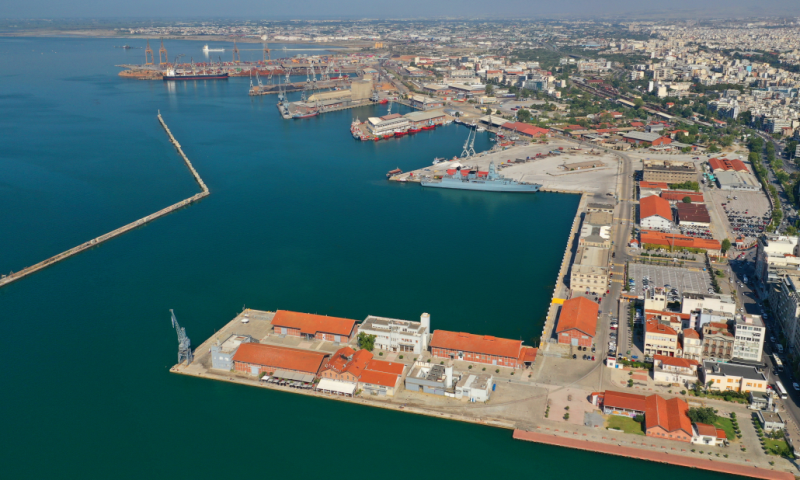
The Port of Thessaloniki is moving forward with the largest expansion project in its history, marking a major milestone in its strategy to strengthen its position as a leading trade and logistics gateway in Southeast Europe.
The ambitious development programme is centered on significant infrastructure upgrades designed to increase cargo-handling capacity, accommodate larger vessels and enhance the port’s competitiveness in regional and international shipping markets. The investment is expected to transform Thessaloniki into a more efficient hub for containerized, bulk and general cargo traffic.
A key component of the project is the expansion of the port’s main container terminal, which will enable it to handle larger container ships and growing cargo volumes. The upgrades are also expected to improve operational efficiency, reduce vessel turnaround times and strengthen intermodal connections with inland markets across the Balkans and Central Europe.
Port officials have described the project as a strategic investment aimed at supporting long-term trade growth and meeting increasing demand from shipping lines, logistics providers and cargo owners. The expansion is expected to create new opportunities for regional supply chains and reinforce the port’s role as a critical gateway linking Europe, the Mediterranean and international markets.
Industry observers note that the development comes amid increasing competition among regional ports seeking to attract larger vessels and capture a greater share of container traffic. Enhanced infrastructure and deeper berths are becoming essential as shipping lines deploy larger ships and demand more efficient port services.
The expansion is also expected to support economic growth in northern Greece by generating employment opportunities, attracting private investment and strengthening the region’s logistics and transportation ecosystem. Improved connectivity through road, rail and maritime networks is expected to further enhance the port’s appeal as a distribution and transshipment hub.
As global trade patterns continue to evolve, the Port of Thessaloniki’s investment programme reflects a broader trend of ports upgrading infrastructure to improve resilience, capacity and service quality. Once completed, the project is expected to significantly increase the port’s cargo-handling capabilities and strengthen its role in regional and international commerce.
The expansion underscores Thessaloniki’s ambitions to emerge as a key logistics gateway for Southeast Europe and a vital link in global supply chains, supporting trade growth and economic development for years to come.