
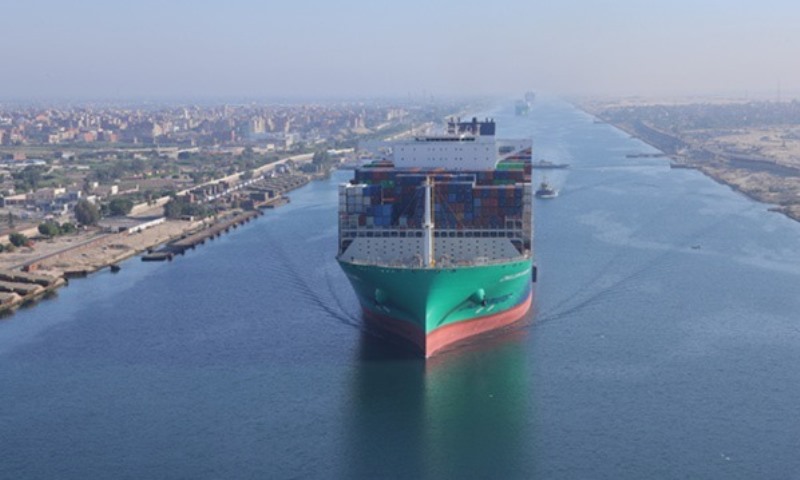
Large containership transits through Egypt’s Suez Canal have increased more than tenfold, signalling a significant recovery in vessel movements through one of the world’s most important maritime trade routes.
The rise points to improving traffic conditions for container shipping through the canal, which connects the Mediterranean Sea with the Red Sea and provides a shorter route between Asia and Europe. Disruptions in the Red Sea region had prompted many shipping companies to divert vessels around the Cape of Good Hope, increasing sailing distances, transit times and operating costs.
A return to the Suez Canal can help carriers reduce voyage distances and improve vessel utilisation, although decisions depend on security assessments, insurance costs and the reliability of passage through the region.
During the third quarter of 2026, 166 medium-sized and large containerships transited the canal, carrying a combined net tonnage of 29 million tonnes. This compares with just 16 vessels and 2.4 million tonnes during the same period in 2025, according to the Suez Canal Authority.
The increase in large-vessel transits is an encouraging sign for global shipping, but a sustained recovery will depend on regional security, carrier risk assessments and the continued return of services to the Asia–Europe route.