
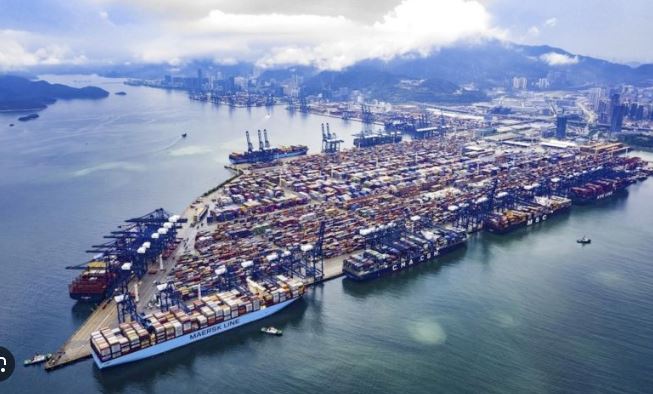
China’s Shenzhen Yantian Port Holdings plans to invest approximately $566 million in the first phase of a new terminal project at Zhangjiagang in Jiangsu province, expanding its presence in the Yangtze River shipping network.
The company plans to invest 3.7884 billion yuan (approximately $566.1 million) through its wholly owned subsidiary, Shenzhang Port (Jiangsu) Port Co Ltd. The proposed terminal will be located in the Metallurgical Industrial Park operating area of the Zhangjiagang section of Suzhou Port.
The facility is expected to integrate cargo handling, logistics, warehousing, business services and multimodal transport. The project aims to strengthen connections between coastal ports and inland river shipping routes, improving cargo movement across the Yangtze River basin.
Yantian Port’s board approved the investment on October 10. However, the proposal remains subject to shareholder approval at an extraordinary general meeting scheduled for October 29. No project contracts had been signed at the time of the company’s filing.
Around 40% of the planned investment, amounting to 1.51536 billion yuan ($226.4 million), is expected to be funded through equity. The remaining amount will be raised through bank loans and other financing channels. The company may also consider bringing in strategic investors as the project progresses.
Zhangjiagang is an important cargo-handling centre in Jiangsu province, serving industrial and manufacturing businesses across the Yangtze River Delta. The port handled 254 million tonnes of cargo in 2025, including 76.07 million tonnes of foreign-trade cargo and 1.21 million TEUs of containers.
The proposed terminal forms part of Yantian Port’s strategy to expand its inland logistics network and strengthen river-sea transport links. If implemented, the project could support more integrated cargo movement between inland industrial centres and international shipping routes, while expanding the company’s logistics footprint in eastern China.