
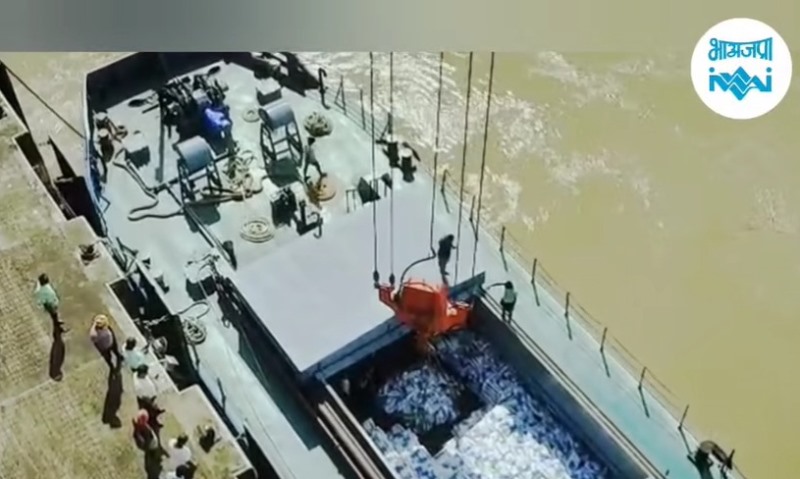
A consignment of 1,500 metric tonnes (MT) of UltraTech Cement is currently being loaded at GR Jetty in Kolkata for onward transportation to Pandu Port in Guwahati through the Indo-Bangladesh Protocol (IBP) route under the Government of India’s Jalvahak Scheme.
The movement highlights the growing role of inland waterways transport (IWT) in enabling cost-effective, sustainable and efficient cargo movement across the eastern and northeastern regions of the country. The cargo will traverse the IBP route connecting India and Bangladesh, which has emerged as a key logistics corridor for trade and cargo transportation to the Northeast.
The Jalvahak Scheme, launched to promote modal shift from road and rail to inland waterways, aims to encourage cargo owners and logistics operators to utilise riverine transport networks by offering financial incentives and operational support. The initiative is expected to reduce logistics costs, decongest road networks and lower carbon emissions while improving connectivity to remote regions.
Industry stakeholders noted that the movement of cement cargo through inland waterways demonstrates the increasing confidence of manufacturers in the reliability and efficiency of the IWT ecosystem. The use of the Kolkata–Pandu corridor also underlines the strategic importance of National Waterway-2 and the IBP route in supporting industrial supply chains in the Northeast.
Authorities said such cargo movements are contributing to the strengthening of multimodal logistics infrastructure and helping realise the government’s broader vision of enhancing inland water transport as a major component of India’s freight transportation network.