
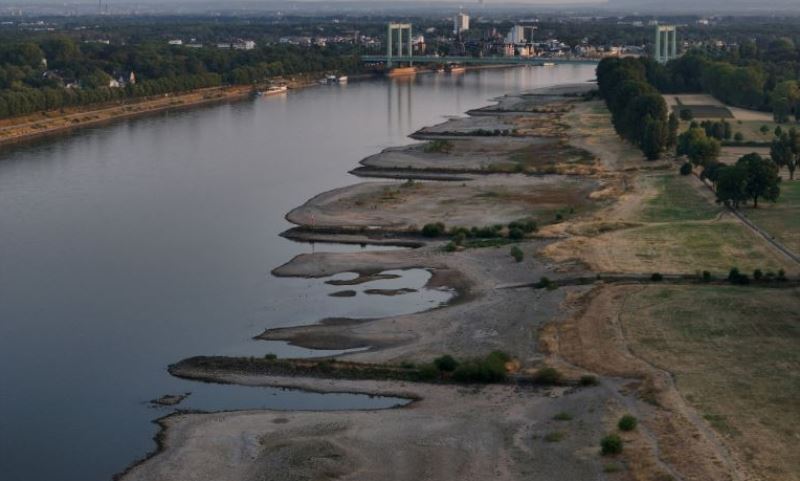
Shipping on the Rhine River is facing growing disruption as prolonged heat and drought push water levels to historically low levels, making it increasingly difficult for cargo vessels to operate at normal loads. The situation is creating supply bottlenecks and raising freight costs for industries across Germany.
The Rhine is a critical transport corridor for Germany, carrying commodities including chemicals, fuels, grains, minerals and other raw materials. Extremely shallow sections are forcing vessels to reduce their cargo loads, while some sailings have been suspended altogether.
The Kaub section has emerged as a major concern because of its shallow conditions. German shippers have warned that continued declines could effectively split the navigable Rhine and disrupt cargo movements along one of Europe’s most important inland waterways.
The disruption is already affecting industrial supply chains. Chemical manufacturer Covestro has declared force majeure for some products, while Evonik has reported reduced cargo volumes at its Marl site. Other companies are turning to rail and road transport, although these alternatives have limited capacity and are more expensive.
Agricultural and commodity traders are also being affected. RWZ has reported shipping less than 10% of its normal volumes during peak periods and warned that the situation could worsen if water levels do not recover by October.
The low-water crisis is also putting pressure on freight rates because barges that can still navigate the river are unable to carry their normal loads. Cargo owners therefore face higher costs as operators seek to compensate for reduced carrying capacity.
The latest disruption highlights the vulnerability of Europe’s inland-waterway network to prolonged periods of extreme heat and drought. Industry groups are calling for stronger investment in waterways and better integration with road and rail networks to improve resilience.
With the Rhine serving as a major artery for European industrial logistics, continued low water levels could have wider consequences for manufacturing, energy supplies and commodity movements if conditions persist.