
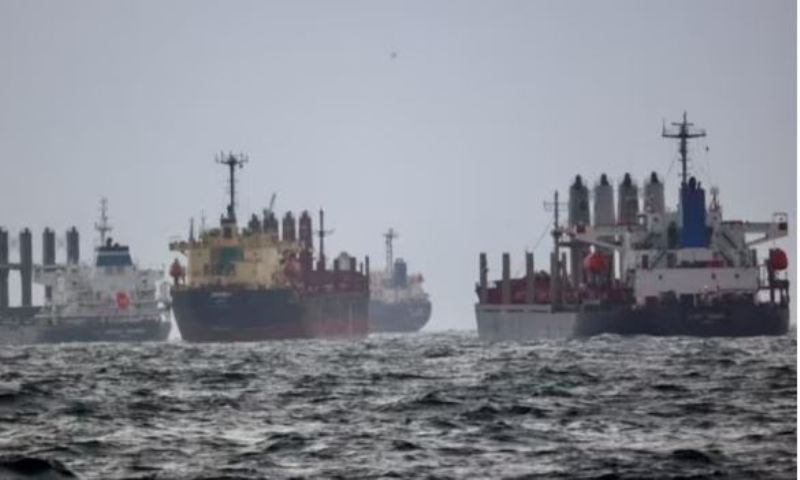
Russian President Vladimir Putin has rejected Ukraine’s proposal for a truce covering attacks on civilian shipping in the Black Sea, according to Ukrainian President Volodymyr Zelenskyy. The development comes as Russian and Ukrainian attacks on commercial vessels and port infrastructure have intensified, raising concerns over global grain supplies.
Ukraine had proposed that both sides halt attacks on ships carrying agricultural commodities through the Black Sea. Zelenskyy said Moscow rejected the proposal because Russia wanted guarantees that Ukraine would stop strikes against its energy infrastructure.
Putin separately said that Russia had rejected ceasefire proposals from Kyiv, describing some of them as unacceptable, while reiterating that Moscow remained open to dialogue based on what it called the realities on the ground.
The dispute comes amid growing risks to commercial shipping in the Black Sea. Russia and Ukraine have both intensified attacks in the region, with damage to vessels and port infrastructure disrupting agricultural exports and contributing to concerns about food supplies.
Ukraine’s ports in the Greater Odesa region handle around 90% of the country’s grain shipments. Recent disruptions have sharply reduced export volumes, while Russia has also faced interruptions at major grain and oil terminals following Ukrainian attacks.
Zelenskyy said Kyiv remained willing to discuss reciprocal ceasefires, including separate agreements covering energy and agricultural infrastructure. However, the rejection of the Black Sea shipping proposal leaves commercial vessels operating under continued security risks as the region enters an important period for grain exports.