
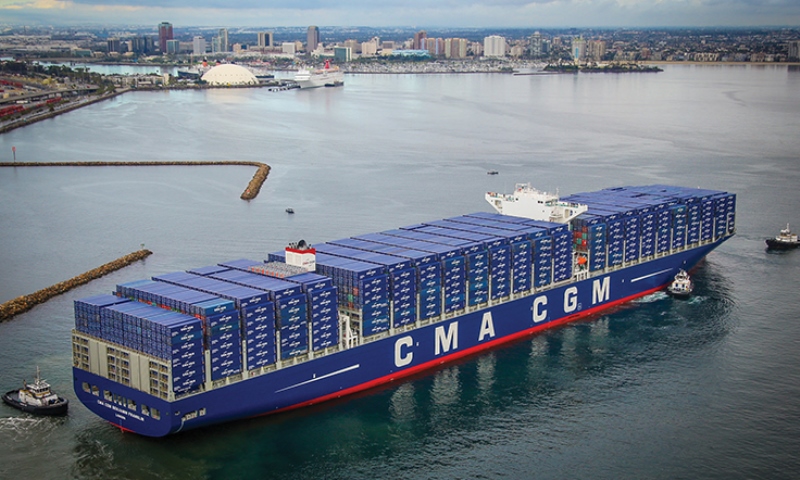
CMA CGM has increased its Peak Season Surcharge (PSS) on shipments from North Europe to the United States, as carriers seek to capture stronger demand and higher costs on the transatlantic trade. The revised surcharge applies to cargo moving to the US East Coast, West Coast and Gulf, as well as inland destinations reached through those gateways.
The surcharge covers dry and reefer containers, with the earlier tariff set at US$300 per 20-foot container and US$600 per 40-foot, 40-foot high-cube and 45-foot container. OOG cargo is excluded from the applicable tariff.
The North Europe origin range includes ports across North France, the UK, Ireland, Scandinavia, Poland, the Baltic and northern Spain, while Portugal is excluded. The measure forms part of CMA CGM’s efforts to manage capacity and pricing during the peak shipping season.
The move comes amid stronger transatlantic freight markets. Industry data shows carriers have been attempting to raise rates and apply additional surcharges as demand strengthens and available capacity remains under pressure.
CMA CGM’s latest pricing action adds to a broader series of peak-season surcharge adjustments across its network in 2026, reflecting continued volatility in container shipping costs and demand patterns.
The higher PSS is expected to increase shipping costs for exporters moving cargo from Northern Europe to the US, particularly during the current period of elevated demand.