
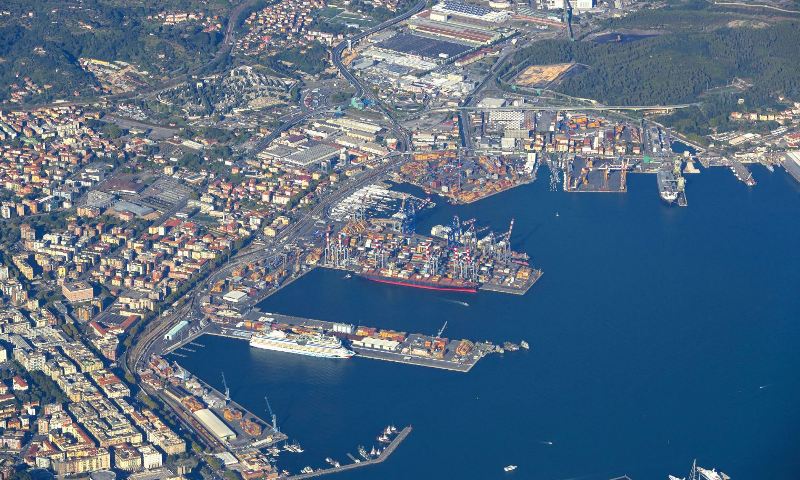
La Spezia Container Terminal (LSCT) has signed contracts worth €90 million for new cargo-handling equipment ahead of the planned development of the new Ravano Terminal at Italy’s Port of La Spezia. The order includes four ship-to-shore (STS) cranes and 18 yard cranes, comprising RTG and RMG units.
The equipment contract has been awarded to a leading Chinese manufacturer following a selection process assessing technological capabilities and quality requirements. Delivery is scheduled within 24–28 months, making the order a key step ahead of construction of the new terminal facilities.
The four new STS cranes will enable LSCT, part of Contship Italia, to handle the latest generation of container vessels, including ships with capacities of up to 24,000 TEU. The cranes will incorporate advanced digital and automation features, including optical container recognition, truck-position detection and ship-profile scanning.
The yard equipment will also support LSCT’s move towards greater automation and electrification. The new machinery will be electrically powered, while the yard cranes are designed for remote operation. Two RMG cranes will serve the terminal’s new rail yard, strengthening the connection between maritime and rail freight operations.
The €90 million equipment order forms part of a broader €350 million modernisation programme at LSCT covering new equipment, infrastructure improvements and increased operating capacity. The programme is being implemented as the terminal prepares for expansion of the Ravano facility.
LSCT is also targeting a significant increase in its intermodal rail share, from its current average of around 33% to 50%. The development of the new rail yard and deployment of RMG equipment are expected to support this objective by improving the terminal’s rail-handling capability.
The investment is expected to strengthen La Spezia’s ability to accommodate larger containerships while improving terminal productivity, automation and intermodal connectivity. For Contship, the Ravano expansion represents a major step in developing La Spezia as a higher-capacity gateway for container traffic in the Mediterranean.