
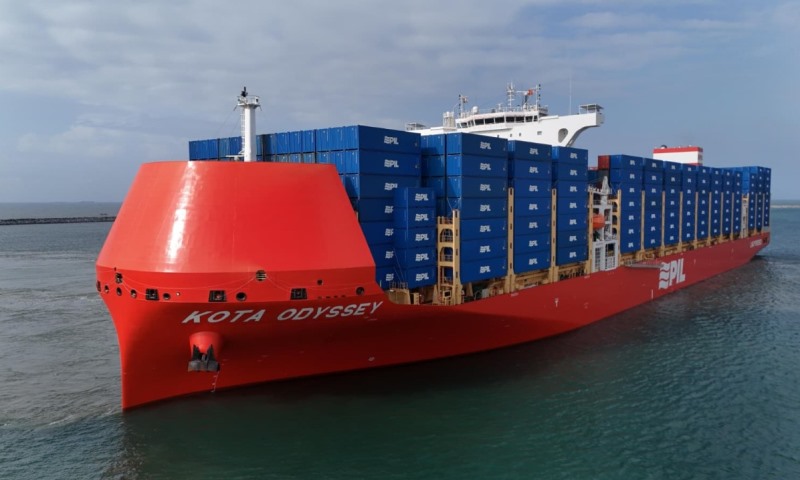
Pacific International Lines (PIL) has placed an order for seven new 1,400 TEU methanol-ready container vessels with China’s Huanghai Shipbuilding as part of its ongoing fleet renewal and expansion programme.
The new vessels, measuring 172 metres in length and 25 metres in width, will feature customised designs to optimise vessel capacity for PIL’s regional markets. Their configuration will also provide operational flexibility to connect smaller ports with major transshipment hubs across the company’s network.
Scheduled for delivery between 2029 and 2030, the vessels will be equipped with methanol-ready technology, enabling PIL to transition towards lower-emission fuels as fuel availability and supporting infrastructure develop. They will also incorporate energy-saving technologies, enhanced cargo safety systems and advanced digital capabilities to improve vessel performance and operational efficiency.
Commenting on the investment, PIL CEO Lars Kastrup said the new feeder vessels would strengthen the company’s capacity and capabilities across its intra-Asia and Pacific Islands network while supporting its ambition to achieve net-zero emissions by 2050.
The vessels will also feature modern technological systems and digital tools for improved operational monitoring, enabling PIL to enhance service offerings and provide customers with more efficient and sustainable shipping solutions.
The order marks another step in PIL’s strategy to modernise its fleet, strengthen regional connectivity and advance its long-term decarbonisation objectives.