
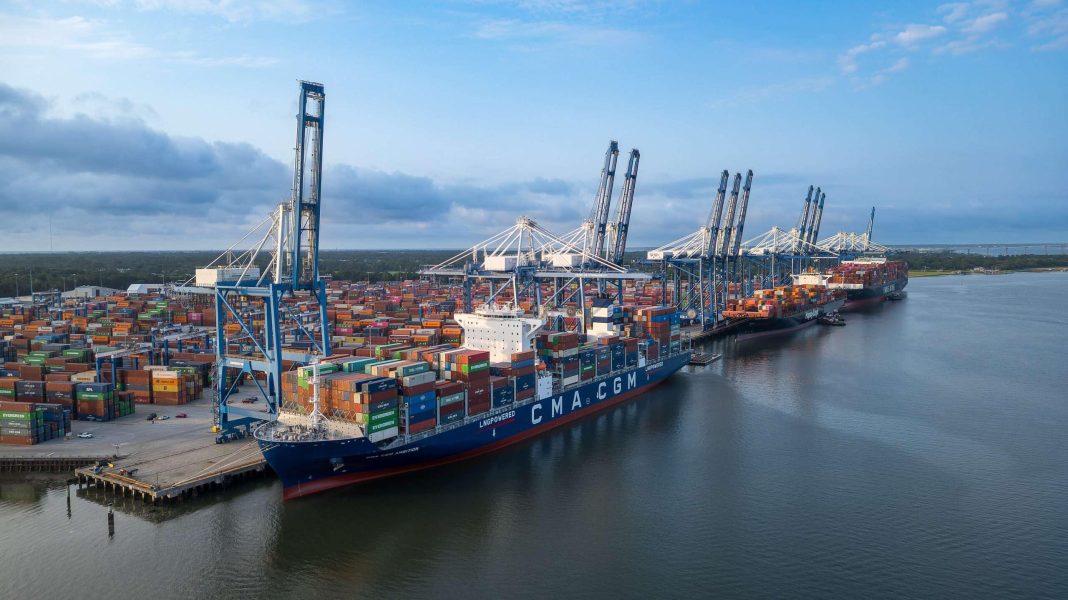
South Carolina Ports’ India Representative Neelam Choudhary highlights infrastructure advantages, trade opportunities, shipping connectivity and growing business prospects for Indian exporters and logistics players.
 As India–US trade continues to expand, the Port of Charleston is positioning itself as an important gateway for Indian exporters and importers seeking access to the southeastern United States and the wider American hinterland.
Operated by South Carolina Ports (SC Ports), the Port of Charleston offers deep-water harbour infrastructure, efficient container handling, rail connectivity and access to some of the fastest-growing consumption and manufacturing markets in the United States.
In this exclusive interview with India Seatrade News, Neelam Choudhary, India Representative – Port of Charleston, South Carolina Ports, discusses the port’s competitive advantages, emerging opportunities for Indian cargo, shipping connections with Indian ports, potential partnerships with Indian maritime stakeholders and the port’s long-term development plans.
Q: How does South Carolina Ports view the growing India–US trade relationship, and what role can the Port of Charleston play in facilitating bilateral cargo movement?
A: The US is one of India’s largest export markets, and the Southeast is among the fastest-growing consumption and manufacturing regions in the country. South Carolina Ports gives Indian shippers a direct route into that market.
Charleston has the deepest harbour in the US Southeast, capable of handling some of the largest ships in the world. We view India–US trade as a long-term relationship and want Charleston to be the first choice for Indian cargo bound for the Southeast and Midwest.
Q: What are the key infrastructure and competitive advantages of the Port of Charleston?
A: Charleston has a 52-foot harbour, and loaded vessels move through Charleston Harbor without tidal restrictions. Crane productivity averages 33 moves per hour.
We operate multiple container terminals and a separate terminal for roll-on/roll-off (Ro-Ro) and breakbulk cargo. SC Ports’ container terminals have ample capacity and plans to expand to accommodate growth for decades to come.
We also operate rail-served Inland Port Greer in the Upstate and Inland Port Dillon, which extend our reach into the Southeast and Midwest.
Q: Which Indian export sectors and commodities offer the greatest potential for growth through the Port of Charleston?
A: The Southeast’s population growth keeps import demand strong. The most promising sectors for Indian exporters include textiles, apparel, home furnishings, automotive components, engineering goods, machinery, chemicals, pharmaceuticals, seafood, and agricultural and food products, particularly spices, rice and processed foods.
Q: What opportunities exist for Indian importers sourcing commodities and products from South Carolina and the wider US hinterland?
A: South Carolina and the wider hinterland offer cargo that suits Indian demand, including agricultural and forest products such as wood pulp and paper, machinery, industrial equipment, auto parts, recycled materials and chemicals. Other segments include polymers and cotton.
Indian importers also benefit from competitive backhaul pricing, since export cargo often moves out of the Southeast on vessels that would otherwise return empty.
Q: How well is Charleston connected to global shipping networks, particularly Indian ports? What shipping services and multimodal logistics solutions are available?
A: Charleston is served by almost all major global carriers on weekly services. For India, the main routings are direct and indirect services from Nhava Sheva and Mundra, as well as connections via Colombo, Singapore or the Mediterranean.
Transshipment connections give smaller Indian origin ports access to Charleston. Once cargo is discharged, it moves by rail to Greer and Dillon, or by truck into Atlanta, Charlotte, the Carolinas, and the wider US Southeast and Midwest.
Q: How is South Carolina Ports improving operational efficiency, reducing logistics costs and enhancing supply chain reliability?
A: On the operational side, consolidating terminal operations has lowered costs and improved asset utilisation. The port’s CEO has confirmed that the first phase of its recovery plan is complete, with operating earnings beating the plan by $16.8 million.
On rail and inland connectivity, Inland Port Greer recorded its highest-ever September, with 17,818 rail moves, up 18% year on year.
We are also working to bring the Navy Base Intermodal Facility online and expand and modernise the North Charleston Terminal, where work has already started.
Q: What opportunities exist for Indian shipping lines, freight forwarders, NVOCCs and other maritime stakeholders to establish business partnerships with South Carolina Ports?
A: Indian shipping lines, freight forwarders, NVOCCs, charterers and logistics providers can partner with South Carolina Ports and its ecosystem of terminal operators, rail carriers, warehouses and customs brokers to offer seamless door-to-door solutions between India and the US Southeast.
Charleston’s reefer capabilities and rail links through Inland Port Greer and Inland Port Dillon create particular opportunities in seafood, pharmaceuticals, frozen food, engineering and manufacturing cargo.
The appointment of an India Representative reflects SC Ports’ commitment to building a long-term presence in the Indian market. As India Representative, I am the first point of contact for Indian stakeholders seeking introductions to the local logistics community in the US Southeast.
I invite Indian industry players to reach out early so we can build the right partnerships together.
Q: What are South Carolina Ports’ strategic priorities for the next five years, and what is your message to Indian exporters, importers and logistics companies?
A: Our long-term plan is to grow Charleston towards a capacity of 8.2 million TEUs. This includes a fully modernised, rail-served terminal in North Charleston, further rail development and the Navy Base Intermodal Facility.
My message to Indian exporters, importers and logistics companies is that Charleston offers a deep harbour, reliable service, strong rail links and room to grow. If you ship to or from the US Southeast, allow us to help you build the right routing.