
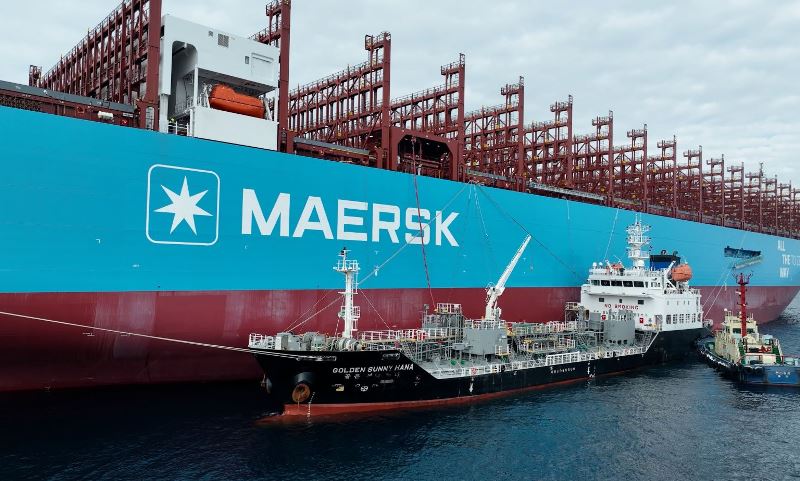
Danish shipping giant A.P. Moller-Maersk has placed an order for 12 ultra-large container ships, each with a capacity of 24,000 TEUs, marking a major addition to its fleet and signalling its continued focus on strengthening long-term container shipping capacity.
The vessels, among the largest container ships in the global fleet, are expected to provide substantial cargo-carrying capacity on major international trade routes. The order reflects the growing emphasis among leading shipping companies on fleet modernisation, operational efficiency and economies of scale.
With a capacity of 24,000 TEUs per vessel, the new ships will be designed to carry significantly larger volumes of containerised cargo. Their deployment could strengthen Maersk’s ability to serve high-volume trade lanes and improve capacity utilisation across its global network.
The order also highlights the continuing importance of large-scale vessels in the container shipping industry. Shipping lines have increasingly invested in bigger ships to optimise fuel consumption per container and reduce operating costs. However, the deployment of ultra-large vessels also requires ports to provide sufficient water depth, berth capacity, crane outreach and efficient landside connectivity.
For major container ports, the arrival of vessels of this size could increase the need for infrastructure upgrades and operational coordination. Terminals must be equipped to handle large exchange volumes while ensuring that cargo moves efficiently through road, rail and inland transport networks.
The investment comes amid ongoing changes in global shipping patterns, fleet competition and environmental regulations. The design, propulsion technology and fuel specifications of the new vessels will be important factors in determining their long-term operational and environmental performance.
The delivery schedule, shipyard details and deployment plans will shape the impact of the order on Maersk’s global network. The addition of 12 vessels would represent a significant fleet commitment as the company prepares for future demand and evolving requirements in international container trade.