
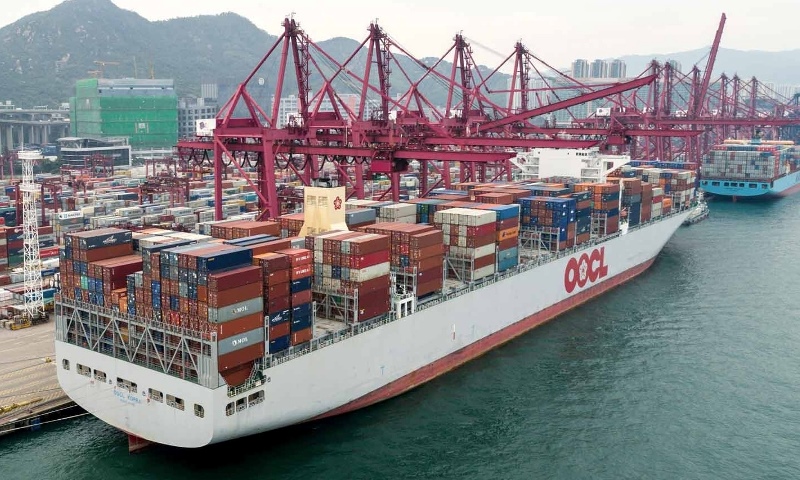
Orient Overseas Container Line (OOCL) has named its third 24,000-TEU methanol dual-fuel container vessel, marking another milestone in the company’s fleet modernisation programme and its efforts to adopt cleaner marine propulsion technologies.
The new vessel is part of OOCL’s investment in ultra-large container ships designed to provide substantial cargo capacity while supporting the transition towards lower-emission shipping. With a carrying capacity of 24,000 TEUs, the ship is designed to handle large volumes of containerised cargo on major international trade routes.
Methanol dual-fuel technology allows vessels to operate using methanol as an alternative to conventional marine fuel, offering shipping companies greater flexibility as the industry explores ways to reduce its environmental footprint. The actual emissions benefits depend on the type and production pathway of the methanol used.
The naming of the third vessel highlights OOCL’s continued focus on expanding its next-generation fleet. Larger container ships can help shipping lines achieve economies of scale by transporting more cargo per voyage, although their deployment requires ports to provide adequate water depth, berth capacity and cargo-handling infrastructure.
The addition of methanol-capable vessels also reflects the growing interest in alternative fuels across the global shipping industry. As international regulations and customer expectations place greater emphasis on decarbonisation, carriers are increasingly investing in ships capable of using alternative energy sources.
For major ports and terminal operators, the introduction of 24,000-TEU vessels will further increase the importance of infrastructure readiness and operational efficiency. Efficient vessel handling and hinterland connectivity will be essential to managing the large cargo exchanges associated with ultra-large container ships.
OOCL’s latest vessel naming represents another step in its fleet renewal strategy, combining large-scale cargo capacity with alternative-fuel technology as the company prepares for the evolving requirements of global container shipping.