
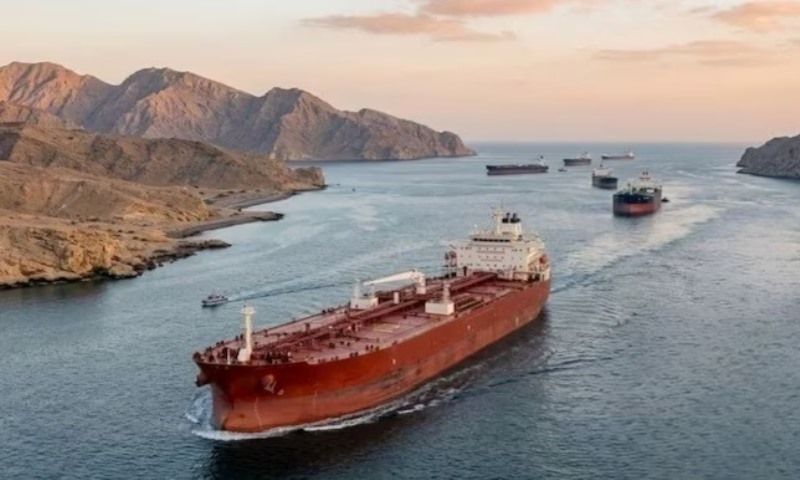
Shipping traffic through the strategically important Strait of Hormuz increased marginally on Wednesday, even as the geopolitical standoff between the United States and Iran continued and markets closely watched ongoing discussions between Iran and Oman over the future management of the waterway.
According to vessel-tracking data from Kpler, 10 visible commodity vessel transits were recorded through the Strait of Hormuz on Wednesday, compared with eight on Tuesday. However, the latest figure remained well below the 10-day moving average of around 15 vessels, indicating that shipping activity continues to operate at subdued levels amid heightened regional uncertainty.
The vessels entering the strait from the Gulf of Oman included two medium-range fuel tankers, one liquefied petroleum gas (LPG) carrier, one Panamax-sized tanker and three Handymax-sized tankers.
On the outbound side, one medium-range fuel tanker, one bitumen tanker and one bulk carrier exited the waterway towards the Gulf, Kpler data showed.
Iran-Oman talks remain in focus
Market attention has also shifted towards discussions between Iran and Oman concerning the Strait of Hormuz. A senior Iranian source said on Wednesday that the two countries were still working on the details of an agreement relating to the strategic waterway.
The comments followed a statement from Iran’s Revolutionary Guards that Iran and Oman had agreed on arrangements for sharing the waterway and its associated revenues. The senior Iranian source, however, indicated that details of the proposed agreement were still being worked out.
The Strait of Hormuz is one of the world’s most important energy corridors, making developments surrounding its security and navigation closely watched by crude oil, petroleum products, LPG and shipping markets.
Bab el-Mandeb traffic also declines
Meanwhile, vessel movements through another critical regional chokepoint, the Bab el-Mandeb Strait, slowed for a second consecutive day.
Kpler recorded 19 commodity vessel transits through Bab el-Mandeb on Wednesday, down from 24 on the previous day. Among the vessels exiting the waterway were six tankers, including a very large crude carrier (VLCC).
The decline highlights the continued caution among shipowners and operators navigating key maritime routes in the region amid security concerns.
Transponder limitations
Kpler cautioned that the visible vessel counts may not represent the full level of maritime activity. Some ships operating through the Strait of Hormuz and Bab el-Mandeb may have their Automatic Identification System (AIS) transponders switched off, meaning they could be missed in tracking-based counts.
The latest figures therefore point to a modest improvement in visible traffic through Hormuz, but overall activity remains below recent averages. With uncertainty surrounding US-Iran relations, the security situation in the region and the outcome of Iran-Oman discussions, shipping and energy markets are expected to continue closely monitoring vessel movements through both strategic waterways.