
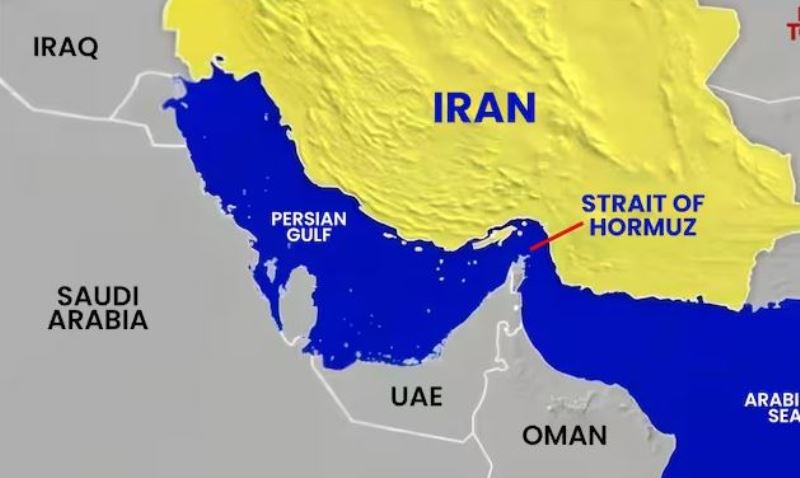
Iran and Oman have reached an agreement on the division of control over the Strait of Hormuz and the sharing of revenues generated from the strategically vital waterway, but Iran’s Islamic Revolutionary Guard Corps (IRGC) has warned that the strait will not be reopened unless the United States accepts the terms of the agreement.
The development follows nearly a month of intermittent negotiations between Tehran and Muscat over the management of maritime traffic through the Strait of Hormuz, one of the world’s most important energy chokepoints.
Before the war, the waterway carried roughly one-fifth of global oil and liquefied natural gas shipments. Most commercial shipping through the strait has been disrupted since the conflict began, contributing to higher global energy prices and raising concerns over the security of energy supplies.
IRGC spokesman Hossein Mohebbi, in comments carried by Iranian state media, said Iran and Oman had reached an understanding on the division of maritime waters and revenues.
“The Strait of Hormuz belongs to Iran and the country of Oman,” Mohebbi said, adding that negotiations between the two countries had produced results acceptable to both sides.
According to Mohebbi, the agreement includes arrangements covering each country’s share of the waters of the Strait of Hormuz as well as the distribution of revenues generated from the waterway.
Iran has accused Washington of attempting to undermine the negotiations between Tehran and Muscat. The IRGC said US opposition had delayed implementation of the agreement and insisted that Washington would need to accept the proposed framework before shipping could return to normal.
Mohebbi said Iran would be prepared to reopen the strait if the United States stopped obstructing the agreement and returned to the negotiated framework.
However, he warned that the waterway would remain closed if Washington rejected Iran’s conditions.
The comments underline the geopolitical complexity surrounding the Strait of Hormuz, where Iran and the United States have sought to exert influence over maritime traffic amid the wider confrontation.
Shipping remains under pressure
Although direct fighting between the United States and Iran has eased considerably in recent weeks, diplomatic efforts aimed at securing a lasting peace agreement have stalled.
The continued threat to commercial vessels has also kept shipping through the Strait of Hormuz highly risky.
On Sunday, Iran blacklisted 45 ships, apparently focusing on vessels involved in ship-to-ship transfers being used by Gulf energy producers to bypass the Iranian blockade. Industry sources said some companies were considering suspending the use of vessels appearing on the blacklist.
The United States, meanwhile, has intensified economic pressure on Tehran. Washington earlier this week threatened penalties against countries continuing to conduct business with Iran, although it said the measures would not be implemented immediately.
The latest US sanctions did not include Chinese financial institutions suspected of supporting Iranian oil exports, which have continued despite Washington’s blockade.
The prospect of renewed diplomatic engagement has provided some relief to energy markets.
Oil prices fell for a third consecutive session on Wednesday, declining by more than $2 a barrel to their lowest level in two weeks. The decline reflected growing expectations that mediation efforts could eventually reduce the disruption to energy supplies caused by the conflict.
Iran has condemned Washington’s campaign to isolate its economy, describing the pressure as “gross lawlessness” and saying it expects several countries to reject the US measures.
The conflict began on February 28 following US and Israeli strikes on Iran, triggering a wider confrontation that has severely disrupted commercial shipping through the Strait of Hormuz.
The proposed Iran-Oman arrangement could become an important development for global shipping and energy markets if it leads to the restoration of safe and predictable vessel movements through the strait.
However, the IRGC’s insistence that reopening depends on US acceptance means uncertainty remains high. Until a broader political understanding is reached, shipping companies, energy producers, insurers and commodity markets are likely to continue closely monitoring developments around the waterway.
For the global maritime industry, the key question now is whether the Iran-Oman agreement can translate into a workable security and traffic-management framework—or whether continued disagreement with Washington will keep the Strait of Hormuz effectively restricted.