
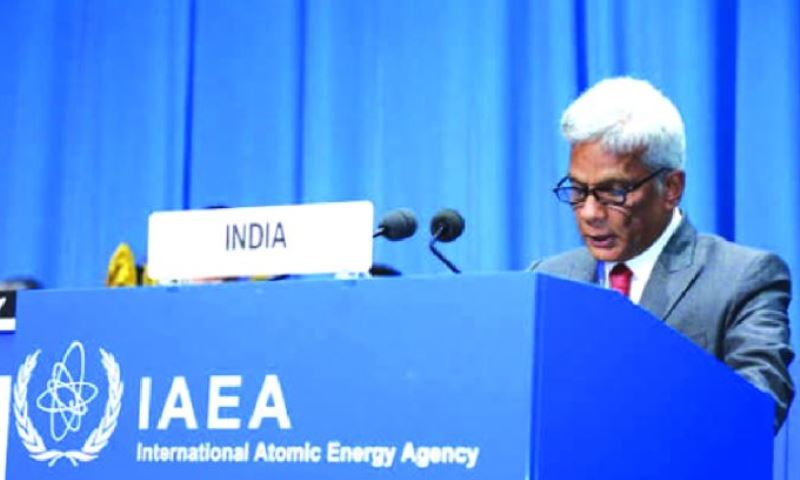
India has joined the International Atomic Energy Agency’s (IAEA) ATLAS initiative to explore the safe and peaceful use of nuclear technology in civilian maritime applications, including nuclear-powered commercial vessels and floating nuclear power plants.
The Atomic Technologies Licensed for Applications at Sea (ATLAS) initiative focuses on small modular reactors (SMRs) for commercial shipping and offshore energy. The technology could enable vessels to operate for longer periods without frequent refuelling while providing a low-carbon energy option for maritime transport.
India’s Atomic Energy Commission Chairman Ajit Kumar Mohanty said the initiative presents opportunities for the country given its long coastline, offshore islands and expanding commercial shipping sector. India sees potential applications for SMRs in offshore energy supply and, eventually, civilian vessel propulsion.
Mohanty also linked ATLAS with India’s broader nuclear expansion plans, including its target of achieving 100 GW of nuclear power capacity by 2047 and deploying at least five indigenous Bharat Small Modular Reactors by 2033.
The IAEA said ATLAS will bring together governments, regulators, the nuclear industry, maritime operators and port authorities to address safety, security, legal, regulatory and liability issues surrounding nuclear applications at sea.
India’s participation places it among countries exploring nuclear propulsion and offshore nuclear power as potential long-term solutions for decarbonising maritime transport and strengthening energy security.