
India and Egypt are discussing a wheat-for-fertilisers deal to cope with shortages of the two commodities even as they take forward steps to ramp up bilateral trade, people familiar with the matter said.
The two countries elevated their relationship to a strategic partnership during Prime Minister Narendra Modi’s visit to Egypt in June and set a target of boosting two-way trade to $12 billion by 2027. Renewable energy, especially green hydrogen, has emerged as a focus area of cooperation.
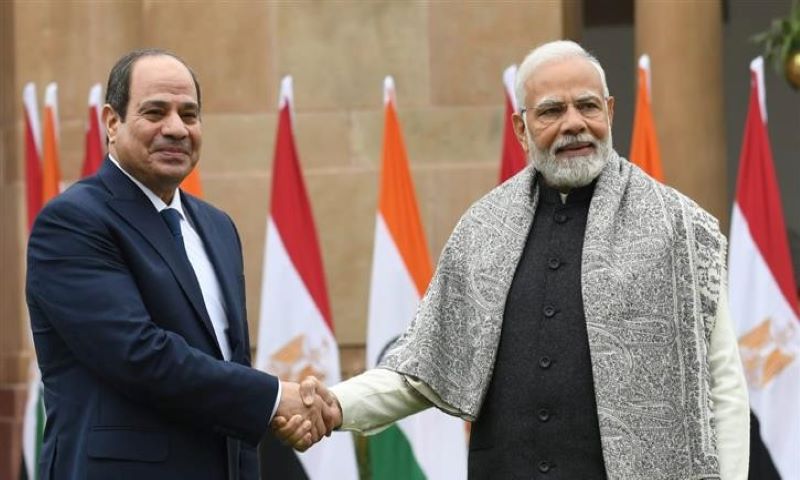
The discussions on a wheat-for-fertilisers deal began when Egyptian President Abdel Fattah El-Sisi raised his country’s need for the grain during a meeting with Modi, one of the people cited above said. In turn, Modi raised India’s requirement for fertilisers, the person said.
“The deal is now being discussed as it will ensure food security for both countries,” the person added.
Egypt approved India as a certified wheat supplier in April 2022 and the first order from the Egyptian side for 63,500 tonnes of wheat was placed just before the Indian government banned wheat exports in May 2022.
India is one of the largest producers of food grains – both rice and wheat – but it needs fertilisers in large quantities at an economical rate. Fertilisers ranked second among Egypt’s exports in 2022, with sales worth $2.7 billion. Egypt is also the world’s fifth largest exporter of fertilisers and produces 7.8 million tonnes of nitrogen fertilisers and four million tonnes of phosphate fertilisers annually.
Egypt, which was largely dependent on wheat imports from Russia and Ukraine, has been hit hard by the disruption of supplies due to the ongoing war. Hence, there could be a natural synergy in this area between the two strategic partners, the people said.
In 2021, Egypt imported more than 80% of its wheat requirements (worth about $2 billion) from Russia and Ukraine. These imports are now disrupted.
“India always helped countries in their time of need. It supplied food and Covid-19 vaccines to several countries during the pandemic. After ensuring the food security of its own people, it is open to supplying food grains and other materials for mutual gains,” a second person said.
Egypt lifted several non-tariff barriers (NTBs) against wheat imports from India when it approved the country as a certified supplier in April 2022, the second person said. Egyptian officials also conducted pest risk analysis at various farms and port facilities in Madhya Pradesh, Maharashtra and Punjab with the intent to import wheat.
India is also keen to enhance its commercial ties with African countries to meet its needs for fertilisers and fuel. In June, Union commerce minister Piyush Goyal hosted 15 ambassadors from African states, including Egypt, and stressed the potential to become the powerhouse of the future, a third person said.
“The event was aimed at fostering closer economic cooperation, enhancing trade relations and exploring areas of collaboration between India and Africa,” this person said.
Trade and investments between Egypt and India have increased in recent years and the Egyptian market has welcomed innovative Indian technology solutions in fields such as renewable energy, pharmaceuticals, food production, logistics, engineering and transport.
Several Indian businesses have expanded their investments in Egypt, with an eye on using the country as a gateway to Arab, African and European markets. Indian investments in Egypt have reached $3 billion and are expected to grow following the signing of agreements in fields such as renewable energy, communication, IT and offshoring.