
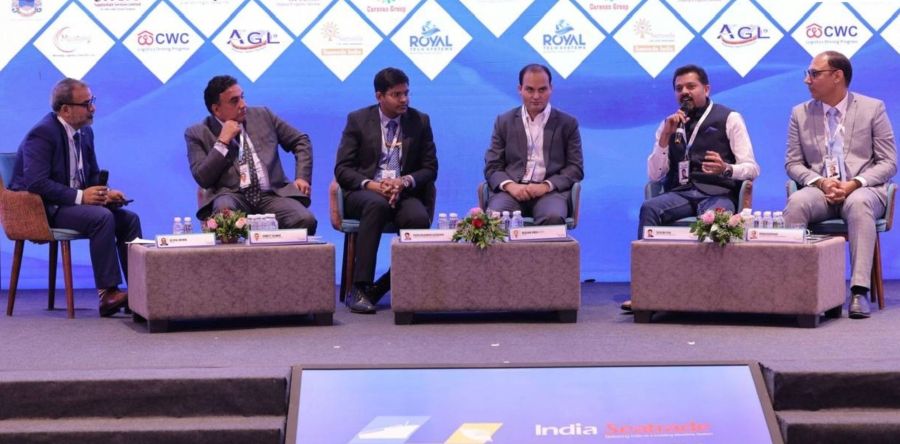
India Seatrade successfully organised the 8th Multimodal Logistics Summit – Mundra/Kandla 2026 on 9 October at Radisson Hotel Kandla, Gandhidham, bringing together key stakeholders from the port, shipping, railways, logistics, trade and manufacturing sectors to discuss opportunities and challenges in strengthening India’s multimodal logistics ecosystem.
 Held under the theme “Strengthening India’s Trade Gateways: Driving Manufacturing Growth, Multimodal Connectivity and Global Trade Competitiveness,” the summit focused on enhancing the strategic role of Mundra and Kandla ports, improving cargo evacuation, strengthening hinterland connectivity and unlocking new opportunities for export-import (EXIM) trade.
The discussions highlighted the growing importance of integrated rail-port connectivity, efficient cargo evacuation and reliable freight transportation in reducing logistics costs, improving supply chain efficiency and enhancing India’s competitiveness in global markets.
A key focus was the transformative role of Dedicated Freight Corridors (DFCs) in India’s freight transportation network. Highlighting the Western Dedicated Freight Corridor’s contribution to EXIM logistics, DFCCIL representatives underlined its ability to enable faster container movement, improve connectivity with major ports, including Mundra and Kandla, and support more predictable freight operations.
 The Western DFC’s infrastructure capabilities, including double-stack container operations, higher axle loads and long-haul train operations, are creating opportunities for more efficient rail-based cargo movement. The expanding network of Gati Shakti Cargo Terminals and innovative freight services also offers new avenues for private investment, logistics development and the movement of diverse cargo segments.
The summit featured three panel discussions covering the strategic role of Mundra and Kandla ports in India’s trade growth, cargo evacuation and hinterland connectivity, and opportunities to drive cargo growth from the ports to global markets. Industry leaders exchanged views on infrastructure development, rail and road connectivity, operational efficiency, multimodal integration and the potential of Free Trade Agreements (FTAs) to expand export opportunities.
Participants emphasised the need for closer coordination among port authorities, terminal operators, railways, logistics providers, shipping lines and exporters to build seamless cargo corridors and improve end-to-end logistics performance.
 The deliberations also reinforced the importance of integrated connectivity among ports, Dedicated Freight Corridors, logistics parks and feeder networks in advancing the vision of seamless, “anywhere-to-anywhere” freight transportation.
The 8th edition of the summit reaffirmed India Seatrade’s commitment to providing a platform for meaningful industry dialogue, fostering collaboration and identifying practical solutions to strengthen India’s maritime and logistics sectors.
By bringing together stakeholders from across the logistics value chain, the summit sought to advance the shared objective of making India’s trade gateways more efficient, resilient and globally competitive.