
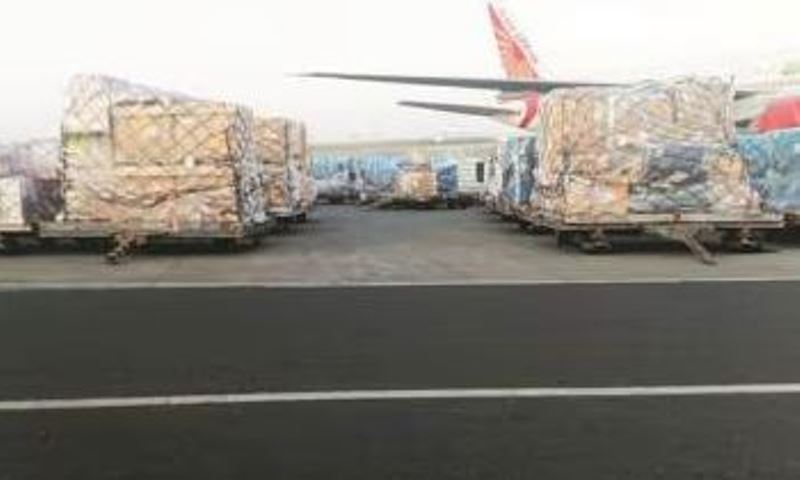
India is stepping up efforts to transform its air cargo sector and achieve an ambitious target of handling 10 million metric tonnes of air cargo annually by 2030, nearly three times the current level. The target is aimed at strengthening India’s position as a global logistics and manufacturing hub.
India currently handles around 3.5–3.9 million tonnes of air cargo a year, with recent industry estimates indicating strong growth in both domestic and international volumes. At the same time, the country’s overall air cargo handling capacity is being expanded significantly. AAICLAS has indicated that existing capacity of about 10.3 million tonnes could rise to 15.3 million tonnes by 2030, providing sufficient infrastructure headroom if cargo volumes continue to grow.
Achieving the 10-million-tonne throughput target will require substantial investment in cargo terminals, warehousing, cold-chain facilities, freighter capacity and multimodal connectivity. Industry stakeholders are also calling for faster regulatory processes and greater digital integration across customs, airports, airlines, freight forwarders and other logistics participants.
Digitalisation is expected to play a particularly important role. The proposed National Air Cargo Community System and the broader Air Cargo Policy 2.0 are intended to enable smoother end-to-end cargo processing, reduce paperwork and improve supply-chain visibility.
India is also looking at new technologies to expand cargo connectivity. The air cargo industry is exploring electric vertical take-off and landing (eVTOL) aircraft and drones for specialised applications, particularly for medical logistics and reaching underserved locations. The Directorate General of Civil Aviation has already issued airworthiness criteria for eVTOL operations and guidelines covering vertiports.
The growth strategy is closely linked to India’s expanding manufacturing, e-commerce, pharmaceutical, electronics and perishables sectors. Industry projections suggest that rising exports and India’s role in the China-plus-one supply-chain strategy could generate additional demand for fast and reliable airfreight services.
However, the challenge is not simply building more terminal capacity. Limited dedicated freighter fleets, regulatory bottlenecks, high operating costs and gaps in multimodal connectivity remain significant hurdles. Industry stakeholders therefore see infrastructure expansion, policy reforms, technology adoption and stronger international connectivity as essential to achieving the 2030 objective.
If successfully implemented, the 10-million-tonne target could significantly enhance India’s role as a regional and global air cargo hub, supporting exports, high-value manufacturing and more resilient international supply chains.