
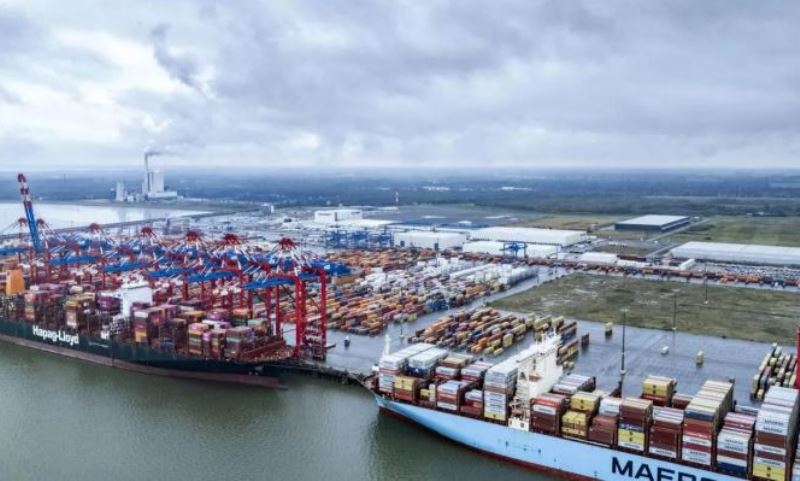
Maersk and Hapag-Lloyd have highlighted growing pressure on landside logistics networks as shipping demand remains firm across key global trade lanes.
The carriers said congestion and capacity constraints on the landside are creating operational challenges, with bottlenecks affecting the movement of containers between ports, terminals, rail networks, trucking services and inland depots.
Strong container volumes are adding pressure to logistics infrastructure, particularly at busy gateways where terminals and inland transport providers are facing limited capacity. Such constraints can lead to longer container dwell times, delays in cargo collection and additional equipment imbalances.
The situation also underscores the importance of coordination between ocean carriers, ports, trucking companies, rail operators and inland logistics providers as cargo flows remain elevated.
For shippers, persistent landside congestion could result in less predictable transit times and higher logistics costs, even when ocean freight services continue to operate normally.
Maersk and Hapag-Lloyd’s warnings highlight a broader challenge for the container shipping sector: maintaining reliable end-to-end supply chains as demand remains strong and pressure increasingly shifts from ocean networks to inland logistics infrastructure.