
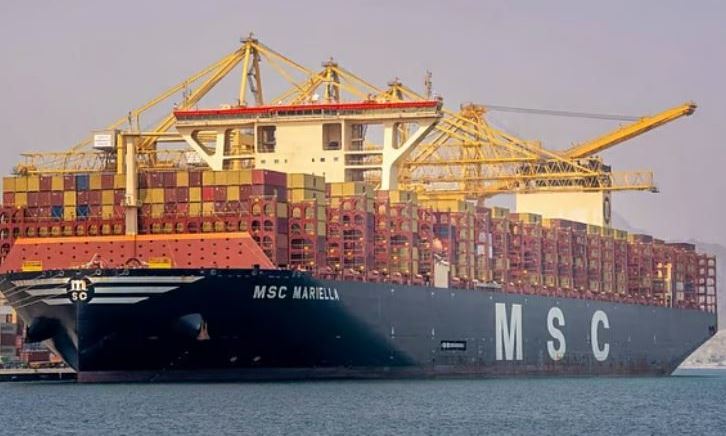
Mediterranean Shipping Company (MSC) and Ocean Network Express (ONE) will jointly operate the Ipanema container service connecting Asia with the east coast of South America under a revised vessel-sharing agreement (VSA), following Hapag-Lloyd’s exit from the existing partnership. The new arrangement is scheduled to begin in April 2027, with the first sailing departing Shanghai on April 3.
Under the revised agreement, MSC and ONE will maintain weekly sailings and continue providing direct connections between major Asian ports and key South American markets. MSC has confirmed that it will deploy additional vessels to support the service, although the number and capacity of the ships have not yet been disclosed.
The service will retain calls at major Brazilian ports, including Santos, Paranaguá, Navegantes and Rio Grande, alongside Montevideo in Uruguay and Buenos Aires in Argentina. The Asian port rotation will include Shanghai, Ningbo, Shekou, Hong Kong and Singapore.
The revised port rotation is Shanghai–Ningbo–Shekou–Hong Kong–Singapore–Santos–Paranaguá–Navegantes–Montevideo–Buenos Aires–Rio Grande–Paranaguá–Navegantes–Santos–Singapore–Hong Kong–Shanghai.
The restructuring is intended to preserve service coverage and maintain reliable connections across the Asia–East Coast South America trade lane. For shippers, the continuation of weekly departures will provide an established link between Asian manufacturing centres and major South American import and export markets.
The change reflects ongoing adjustments among container shipping lines as carriers review vessel deployment, capacity commitments and service partnerships across major global trade routes.