
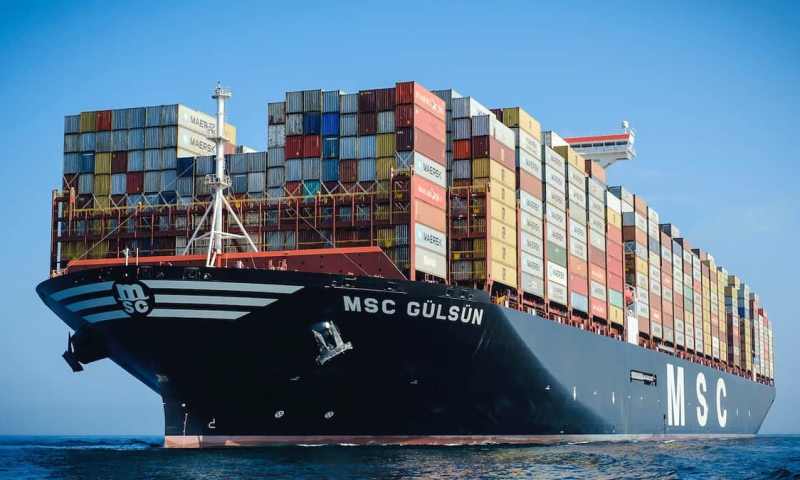
As the separation of its 2M vessel-sharing agreement (VSA) with Maersk continues to gather steam, MSC has revised its transatlantic network to produce what it claims to be the fast transit times between the Med and North America east coast.
The Geneva-headquartered carrier today said it was dropping calls at Barcelona and its dedicated Portuguese transhipment hub of Sines on its MEDUSEC service, which will effectively transform the string into a direct Italy-US east coast express service.
It said the transit time between Genoa and New York would be cut to just nine days, implying that its vessels would increase to sailing speeds of 21 knots on the Atlantic.
The new port rotation is Gioia Tauro-Naples-Livorno-Genoa-New York-Boston-Norfolk-Baltimore-Savannah-Charleston-Malaga-Valencia-Gioia Tauro, and the weekly service deploys seven vessels with an average capacity of 5,000 teu.
To compensate shippers using Barcelona as their gateway to the US, MSC has inserted a call at the Spanish port into its EMUSA service, which connects the eastern Mediterranean with the US east coast on a rotation of: Tekirdag-Gebze-Aliaga-Piraeus-Haifa-Fos-Barcelona-Algecrias-Sines-New York-Boston-Philadelphia-Norfolk-Savannah-Charleston-Tekirdag.
According to the eeSea liner database, the EMUSA weekly service deploys nine vessels with an average capacity of 5,400 teu.
Meanwhile, alongside its place in the EMUSA rotation, Sines will continue to be the final European port of call on MSC’s three other remaining Mediterranean-North America services, the Medgulf, California Express and Med Canadian.
Sines Container Terminal, a 50-50 joint-venture between Singapore port operator PSA and MSC’s terminal subsidiary, TIL, is dominated by the carrier, which is involved in every one of the 23 services listed as calling at the terminal, and has used it as a relay transhipment hub to connect deepsea transatlantic services with Asia-Europe and Europe-Africa routes.
Over the past couple of years, the port has handled around 1.6m teu annually – representing a 60% utilisation rate of the terminal’s annual nominal capacity of 2.7m teu.