
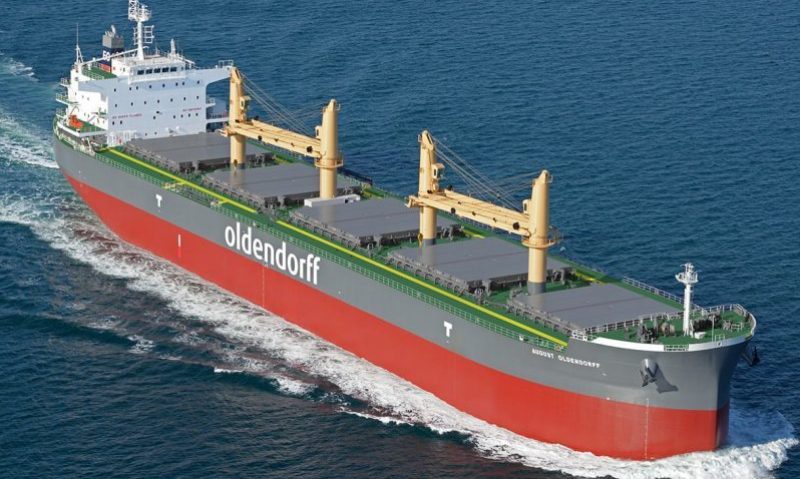
Salzgitter AG has entered into a strategic partnership with Oldendorff Carriers to reduce emissions in the seaborne transportation of iron ore, marking a major step toward greener steel production and low-carbon shipping.
Under the agreement, Oldendorff will deploy energy-efficient vessels and explore the use of alternative, low-emission fuels for transporting iron ore to Salzgitter’s facilities. The collaboration aligns with Salzgitter’s “SALCOS” (Salzgitter Low CO₂ Steelmaking) transformation program, which aims to transition to hydrogen-based steelmaking and significantly cut carbon output.
The partnership also includes operational optimisations such as slow steaming, improved voyage planning, and the integration of digital tools to monitor and reduce fuel consumption. Both companies will jointly assess future opportunities to adopt methanol, ammonia, or other zero-emission fuels as they become commercially viable.
“This partnership is another key lever in our mission to produce green steel,” Salzgitter AG said, highlighting the importance of decarbonizing the entire supply chain. Oldendorff Carriers added that collaborating with major cargo owners is critical to accelerating the adoption of sustainable technologies in maritime logistics.
With shipping accounting for nearly 3% of global CO₂ emissions and iron ore transport being a major contributor, the agreement signals growing industry momentum toward climate-neutral supply chains.