
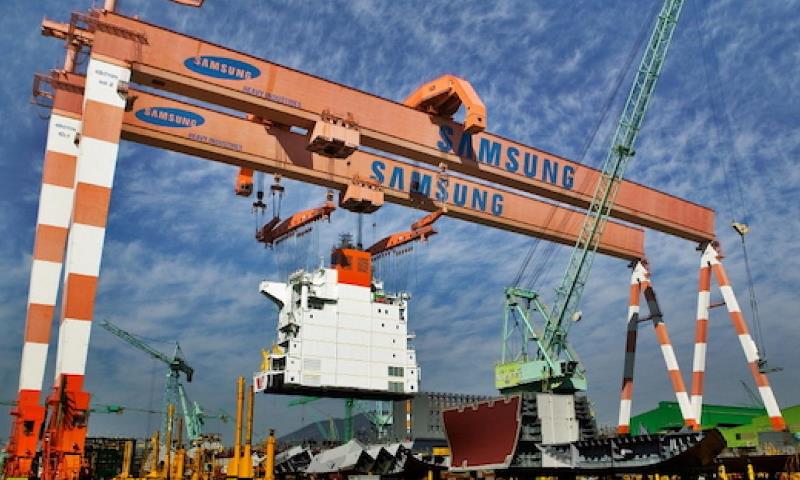
South Korea’s Samsung Heavy Industries is planning to develop a nuclear-powered liquefied natural gas (LNG) carrier designed for transatlantic trade, marking a potential step towards introducing advanced nuclear propulsion technology into the commercial shipping sector.
The proposed vessel is expected to target LNG transportation between the United States and Europe, two major centres of the global natural gas trade. The initiative reflects growing interest in alternative marine propulsion systems as the shipping industry explores ways to reduce emissions, improve fuel efficiency and meet increasingly stringent environmental requirements.
Nuclear propulsion could offer significant advantages for long-distance shipping by providing continuous power without relying on conventional marine fuels. For LNG carriers operating on extended international routes, the technology could potentially reduce fuel-related emissions and improve operational efficiency, subject to the vessel’s design and regulatory framework.
However, developing a nuclear-powered commercial vessel presents substantial technical and regulatory challenges. Safety standards, reactor design, radioactive material management, crew training and emergency response arrangements will require careful consideration. International acceptance and port access are also important factors, as nuclear-powered vessels may face additional restrictions when entering certain ports and territorial waters.
The proposed project could also require collaboration among shipbuilders, nuclear technology developers, energy companies and regulatory authorities. Establishing appropriate safety certification and operating procedures will be essential before such a vessel can enter commercial service.
The move comes as shipbuilders and shipping companies increasingly examine next-generation technologies to support the maritime industry’s decarbonisation goals. While alternative fuels such as LNG, methanol and ammonia remain important areas of development, nuclear propulsion is attracting renewed attention for specialised and long-distance maritime applications.
If successfully developed and approved, Samsung Heavy’s proposed LNG carrier could represent an important technological development in the future of gas transportation and transatlantic shipping.