
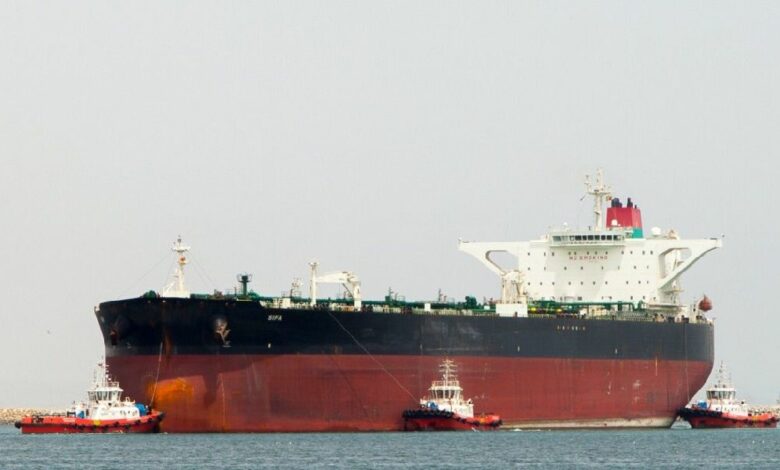
An oil supertanker managed by Shipping Corporation of India (SCI) has resumed its voyage toward the Strait of Hormuz after briefly reversing course in the Persian Gulf, according to vessel-tracking data compiled by Bloomberg.
The 300,000-dwt VLCC Desh Vibhor was initially seen heading toward a southern route recommended by the US military before making a U-turn and later altering course again to continue toward the strategic waterway. The vessel is now proceeding along a more northerly route closer to the Iranian coastline.
Shipping movements through the Strait of Hormuz are being closely monitored by energy markets following the interim peace agreement signed between the United States and Iran on Wednesday. Despite the accord, Tehran has stated that vessels must obtain its permission before transiting the key maritime chokepoint.
Shipping Corporation of India did not immediately comment on the vessel’s movements.
Meanwhile, two other very large crude carriers, Sanmar Herald and Desh Vaibhav, were reported to be transiting the Strait of Hormuz on Friday, heading toward the Arabian Sea.
The Strait of Hormuz remains one of the world’s most critical energy corridors, handling a significant share of global crude oil exports from the Middle East.