
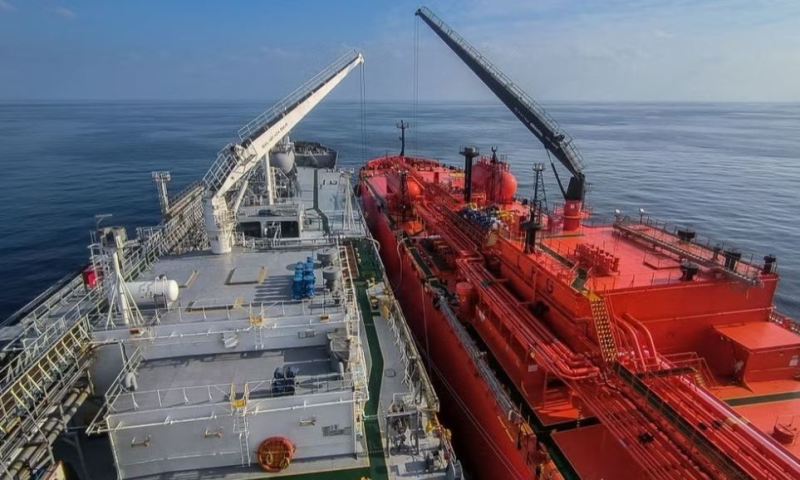
Shanghai Port has set a new global benchmark for green shipping after completing a record 8,016-tonne single-vessel biomethanol bunkering operation, strengthening its position as a major hub for alternative marine fuels.
The operation took place from August 15 to 16 at the Lvhuashan South Anchorage in Shanghai. SIPG Energy, a subsidiary of Shanghai International Port Group (SIPG), supplied the domestically produced biomass methanol to the 13,000-TEU CMA CGM Osmium, a methanol dual-fuel container vessel operated by French shipping group CMA CGM.
The 8,016-tonne delivery more than doubled the previous global record of 3,643 tonnes, which was also set by the same vessel and bunkering team in March 2026. The latest operation is now the largest single-batch biomethanol bunkering recorded worldwide.
The fuel was supplied by the Hai Gang Zhi Yuan, China’s first methanol bunkering vessel operated by SIPG Energy. Most of the biomethanol came from Shanghai Electric’s Taonan green methanol project in Jilin province, with the fuel transported to Dalian before being shipped to Shanghai for storage and final delivery to the vessel.
The bunkering volume is sufficient to support the CMA CGM Osmium’s voyage from Shanghai to the east coast of South America. CMA CGM estimates that using the biomethanol for the voyage could deliver emissions reductions equivalent to approximately 10,000 tonnes of CO₂.
Shanghai is rapidly expanding its green-fuel infrastructure. The port has supplied around 36,000 tonnes of green methanol to vessels since China’s first green-methanol bunkering operation in April 2024, placing it among the leading global ports for cumulative green-methanol bunkering volumes.
The latest operation also demonstrated Shanghai’s ability to coordinate multiple alternative-fuel activities simultaneously. During the same period, another SIPG Energy bunkering vessel supplied 5,038 cubic metres of LNG to Pacific International Lines’ 13,000-TEU LNG dual-fuel vessel Kota Elan. It was China’s first simultaneous anchorage bunkering operation involving two vessels and two alternative fuels.
Shanghai Customs has introduced measures to facilitate green-fuel bunkering for international vessels, including a digital closed-loop supervision system covering the bunkering process. Authorities say the system can improve operational efficiency, reduce vessel turnaround times and lower logistics costs.
The record operation highlights the rapid development of China’s green-methanol supply chain, linking fuel production, storage, transportation, port infrastructure and shipboard consumption. It also demonstrates the growing ability of major container ports to support the transition towards lower-carbon marine fuels.
With shipping lines increasingly deploying methanol-capable vessels, Shanghai’s expanding bunkering infrastructure could strengthen the port’s role in the global alternative-fuel network and support the maritime sector’s wider decarbonisation efforts.