
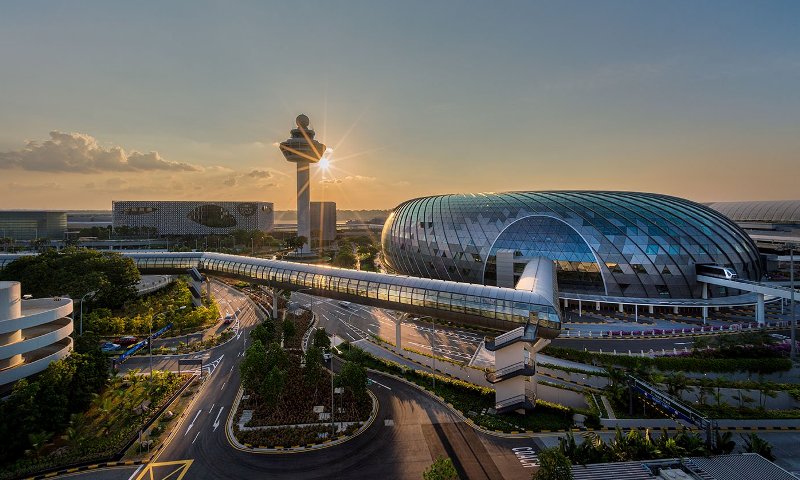
Singapore’s Changi Airport on Wednesday started construction of a fifth terminal, as the world’s fourth-busiest airport by international passengers expands to capitalise on growing air travel in Asia after the pandemic. The airport will also integrate a third runway, which is currently used by the military, by 2030.
Flag carrier Singapore Airlines will eventually consolidate its operations at the new terminal , which will open in the mid-2030s and will be able to handle 50 million passengers per year in its initial phase.
At the groundbreaking, Prime Minister Lawrence Wong said the airport aims to connect Singapore to more than 200 cities by the mid-2030s from around 170 cities now. The government paused work on the terminal in 2020 for two years as air travel collapsed during the COVID-19 pandemic, and subsequently amended design features to meet the needs of post-pandemic travel.
Changi Airport has a current capacity of 90 million passengers annually and handled 67.7 million passengers last year.
Asia’s post-pandemic air travel recovery has lagged in places due to China being slower than the rest of the world to return to international flying.
However passenger numbers in Asia-Pacific are projected to double by 2043, with an annual growth rate of 5.1% outpacing expected growth in Europe and North America, according to the International Air Transport Association (IATA).
The terminal is part of a 1,080-hectare Changi East development, which will also contain cargo and other aviation facilities.
Airport operator Changi Airport Group this month said it had awarded contracts for substructure and airside infrastructure works worth S$4.75 billion ($3.6 billion) on May 5.
Other air hubs in Asia are also expanding capacity to meet future demand. In November, Hong Kong International, the world’s busiest cargo airport, began operating three runways to increase the number of flights it can handle.