
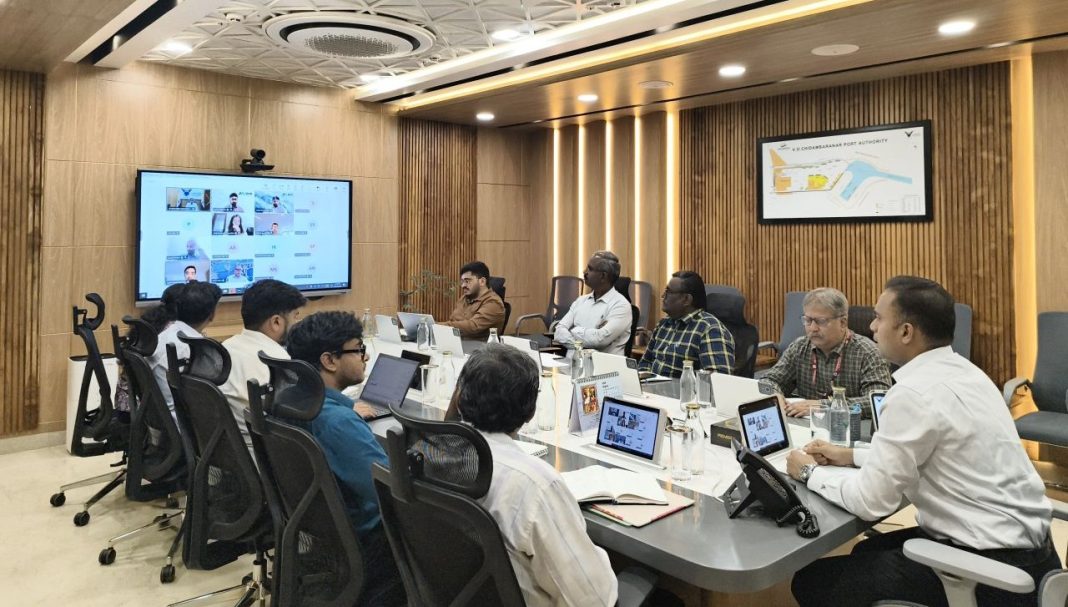
The VOC–Europe Green Shipping Corridor Coalition formally launched its collaborative initiative with a virtual kick-off meeting, bringing together senior officials from the Ministry of Ports, Shipping and Waterways (MoPSW), the V.O. Chidambaranar Port Authority, and key stakeholders from across the global green shipping ecosystem.
The meeting marked an important step towards establishing a commercially viable green shipping corridor linking V.O. Chidambaranar Port with Europe, aimed at accelerating maritime decarbonisation and promoting the adoption of low- and zero-emission fuels in international shipping.
Delivering the keynote address, Shri Venkatesapathy S., IAS, Joint Secretary (IT, E-Gov, IC, MA & MS, DW & DGLL), Ministry of Ports, Shipping and Waterways, highlighted India’s commitment to sustainable maritime development and the importance of international collaboration in building future-ready green shipping corridors.
The special address was delivered by Shri Rajesh Soundararajan, IAS, Deputy Chairperson, V.O. Chidambaranar Port Authority, who reiterated the port’s commitment to supporting green shipping initiatives and strengthening its position as a sustainable maritime gateway.
The virtual session brought together a diverse range of stakeholders, including fuel suppliers, storage and terminal operators, shipowners, shipping operators, shipping lines, international ports, infrastructure providers, cargo offtakers, technology partners, and global industry organisations.
Participants discussed the framework for developing a commercially viable VOC–Europe Green Shipping Corridor, with a focus on fuel availability, port infrastructure, regulatory support, commercial feasibility, and cross-border collaboration. The meeting also laid the groundwork for an upcoming feasibility assessment, which will evaluate the technical, operational, and economic requirements for establishing the corridor.
The coalition emphasised that active engagement from industry stakeholders will be critical in identifying practical solutions, reducing emissions across maritime supply chains, and creating a scalable model for green shipping between India and Europe.
The initiative aligns with India’s broader maritime decarbonisation strategy and global efforts to achieve net-zero emissions in international shipping through collaborative innovation, alternative fuels, and sustainable port infrastructure.