
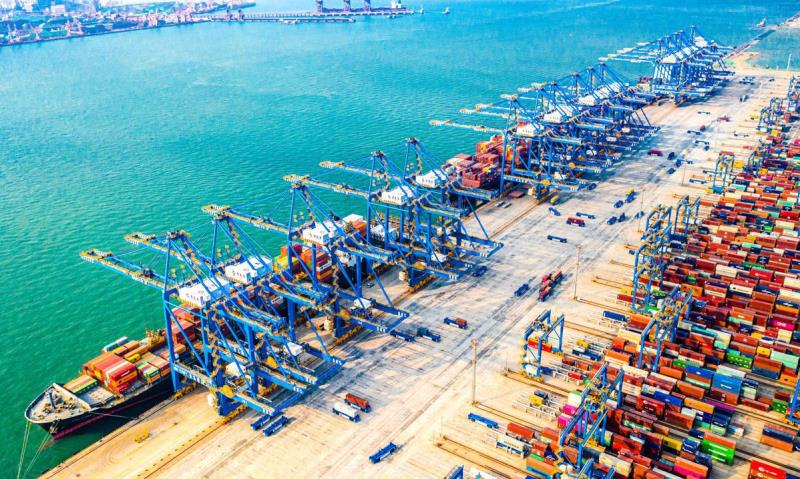
The United Nations Conference on Trade and Development has published a quarterly Port Liner Shipping Connectivity Index (PLSCI), which assigns ports an index-based liner connectivity score.
Commenting on the figures, Sea-Intelligence highlighted that the top 10 most connected ports in 2024-Q4 have had their average connectivity improve steadily across the study period, which has increased after 2020, widening the gap to the next 10 ports significantly.
The remaining top segments have all increased, although only marginally compared to the top 10 most-connected ports.
Sea-Intelligence noted that this shows that the most connected ports are becoming more connected on average.
Alan Murphy, CEO of Sea-Intelligence, said: “Across each of the analysed tiers at the bottom of the connectivity index, we see a decline in the average connectivity, spanning most of the analysed period. So much so that the difference in the average connectivity between each tier in the least-connected 100 ports is now marginal.
“This trend shown here points to a network setup, which is increasingly reliant on a smaller set of major hub ports, where smaller ports are increasingly relegated to feeder services, reducing their overall liner connectivity score.”
Just recently, Sea-Intelligence observed a sharp capacity growth for the 2025 Chinese New Year (CNY) period on Asia – North America West Coast.