
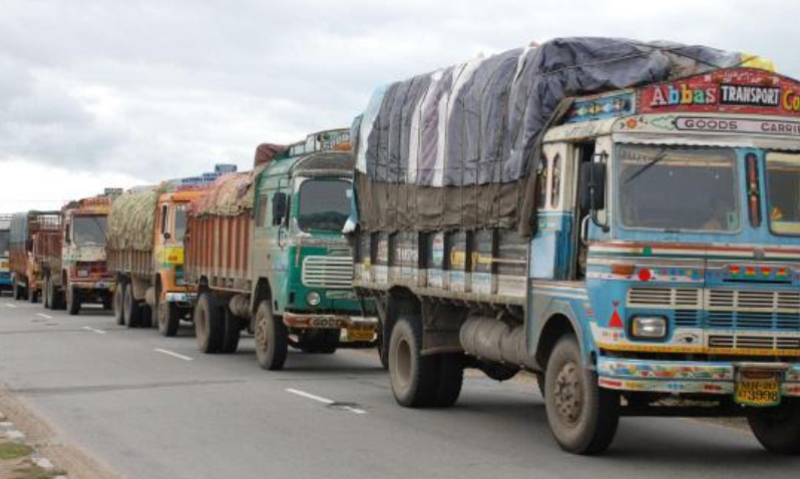
India’s road freight traffic surged in the first half of 2025–26, marking one of the sharpest expansions in recent years. Goods and Services Tax (GST) e-way bills touched a record 754.4 million between April and September, up 21.8 percent year-on-year, as revealed by CMIE in a report titled “Road freight traffic accelerates”. September alone registered 132.1 million bills, the highest monthly generation so far. The increase was visible across states.
FASTag transactions under the National Electronic Toll Collection system reached 2.2 billion during the period. Toll collection volumes grew 13.5 percent year-on-year, compared with 10.9 percent a year earlier. Toll revenues rose even faster, by 18.6 percent, taking total receipts to Rs 404.3 million—the highest ever for the first half of a fiscal year and about 26 percent higher than the average of the previous two years. The sharper rise in revenue than in volume suggests that heavier and higher-paying freight vehicles formed a larger share of the traffic.
High-speed diesel consumption, a proxy for freight intensity, also recovered after last year’s lull. Total use stood at 45.7 million tonnes in April–September 2025, 2.9 percent higher than the 44.4 million tonnes recorded in the same period of 2024, when growth was only 0.9 percent.
The improvement indicates that fleets are operating longer hauls and fuller loads, reflecting renewed vigour in trade and industrial distribution. Trucking associations also report fuller schedules and faster turnaround times. The surge in road freight carries wider economic implications. About 70 per cent of India’s freight moves by road, making it a bellwether of industrial health. The logistics sector contributes roughly 13 per cent of the country’s GDP and employs millions. Faster growth in toll receipts and e-way bill generation thus signals stronger second-quarter GDP prospects.
However, analysts caution that the rebound leans heavily on diesel-based transport, which remains vulnerable to price shocks and environmental costs. Logistics emissions account for about 13 percent of India’s total greenhouse-gas output, with road freight responsible for most of it. The government aims to reduce logistics costs from the current 13–14 percent of GDP to about 9 percent and to shift part of the freight load to rail and inland waterways to cut both expense and emissions.