
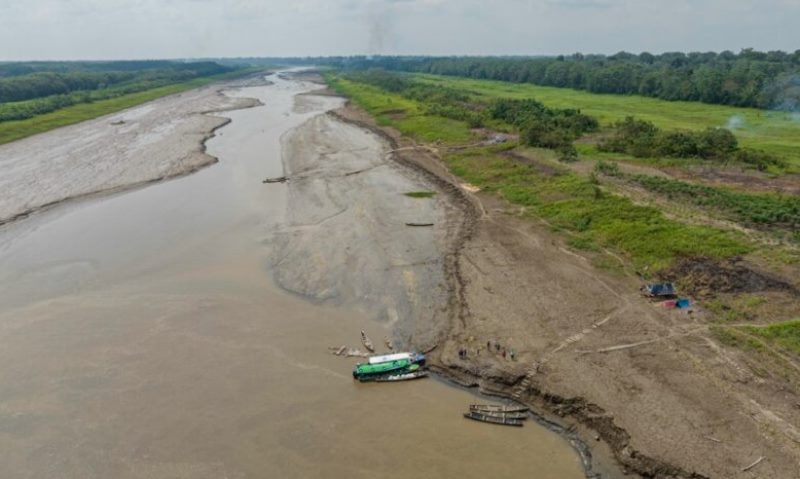
Container shipping lines are introducing low-water surcharges of up to $1,900 per container as falling water levels on Brazil’s Amazon River threaten navigation to Manaus during the 2026 dry season.
Mediterranean Shipping Co. (MSC) has announced a surcharge of $1,400 per dry container and $1,900 per reefer, while Ocean Network Express (ONE) has set a charge of $1,458 per container. ONE’s surcharge is scheduled to apply to imports from September 15 and exports from October 1 if river levels reach the specified threshold.
Maersk has introduced a $1,228-per-dry-container low-water surcharge for shipments to and from Manaus. The charge is scheduled to apply from September for cargo originating in Asia-Pacific, India, the Middle East, Africa and Europe, subject to navigation restrictions materialising.
Maersk expects the greatest operational risk between late October and November, when falling river levels could restrict vessel access to Manaus. If conditions deteriorate, vessels may need to partially or fully discharge cargo at Itacoatiara before the shipments continue by alternative transport.
The Amazon’s seasonal decline in water levels creates significant challenges for container shipping because vessels require sufficient draft to navigate the river. Lower depths can force carriers to reduce cargo loads, deploy additional vessels and tugs, or shift containers to barges and alternative ports.
Hapag-Lloyd has also introduced a low-water surcharge of $1,350 per container, effective September 12 for cargo to and from Manaus. The carrier said the charge is intended to cover additional costs and operational complexities caused by declining water levels.
Carriers are preparing several contingency measures, including additional ships, tugs and pilots, barge transportation, alternative port arrangements and temporary floating infrastructure. Brazilian terminal operator Grupo Chibatão is also preparing to reactivate transshipment facilities at Itacoatiara.
Brazil’s waterways regulator ANTAQ is monitoring the new surcharges and has said carriers need to provide technical and financial justification for additional charges.
The developing situation could increase logistics costs for shippers serving the Manaus industrial region, particularly companies moving containerised imports and exports that depend on regular river access.
The Amazon disruption also highlights a wider problem facing global supply chains this year, with drought and low water levels affecting major commercial waterways in Europe and South America.
For carriers and shippers, maintaining reliable access to Manaus through the dry season will depend heavily on actual river levels and the severity of navigation restrictions. The latest surcharges indicate that shipping lines are preparing early for potentially significant operational disruptions.