
Japanese energy and power company JERA has signed a binding agreement with India’s AM Green for the long-term supply of green ammonia, which will be used as a marine fuel for ammonia-fuelled car carriers, marking a step forward in efforts to decarbonise the shipping industry.
Under the agreement, JERA will procure approximately 70,000 tonnes of green ammonia annually for five years, with supplies expected to commence from AM Green’s Kakinada facility in Andhra Pradesh in 2028/29, according to an announcement by JERA on Tuesday.
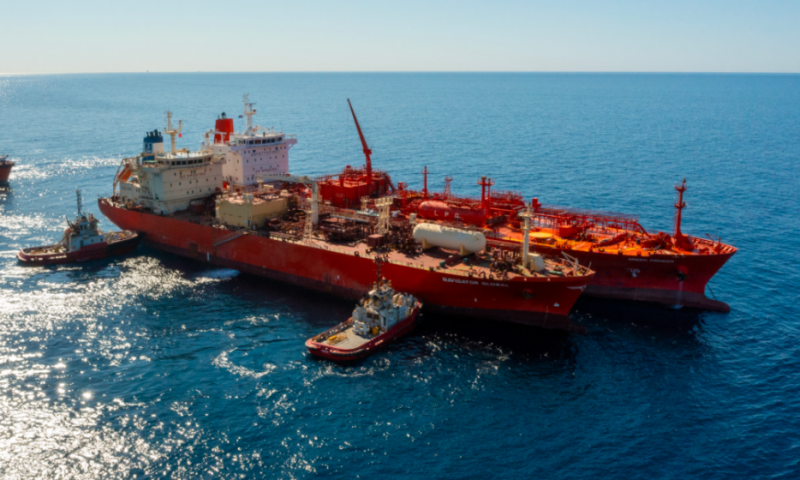
The green ammonia will be transported to Japan for use in a planned bunkering venture involving Japanese shipping companies K Line and NYK. The venture intends to deploy an ammonia bunkering vessel to supply fuel to ammonia-fuelled car carriers, supporting the development of infrastructure required for the adoption of alternative marine fuels.
Mahesh Kolli, Group President and Joint Managing Director of AM Green, said the agreement reflected growing demand for competitively priced green molecules from India. He added that the Kakinada project would play a strategic role in supporting Japan’s decarbonisation ambitions and the wider maritime industry’s transition towards lower-carbon fuels.
The agreement comes as Japan steps up efforts to establish a supply chain for ammonia as a marine fuel. JERA is among seven Japanese companies that announced a collaboration on Tuesday to develop an ammonia bunkering network in Japan, an initiative aimed at facilitating the supply of ammonia to vessels as the industry explores alternatives to conventional marine fuels.
Ammonia is emerging as a potential alternative fuel for deep-sea shipping, particularly for vessel segments seeking to reduce greenhouse gas emissions. However, its wider adoption will depend on the availability of suitable vessels, bunkering infrastructure, safety systems and competitively priced low-carbon supplies.
The transition is beginning to move from development to deployment, with maritime companies taking delivery of vessels designed to operate on ammonia. Earlier this year, maritime company Exmar took delivery of what was reported as the first oceangoing ammonia-fuelled vessel, highlighting the industry’s gradual progress towards ammonia-powered shipping.
For India, the agreement reinforces the potential of its emerging green hydrogen and green ammonia sector to serve international markets, including Japan’s energy and maritime industries. AM Green’s Kakinada project could become an important source of green ammonia for applications ranging from industrial use to the developing market for alternative marine fuels.
The planned commencement of supplies in 2028/29 will align with the anticipated expansion of ammonia-fuelled shipping and the associated bunkering infrastructure, as the global maritime sector explores pathways to reduce emissions from international trade.