
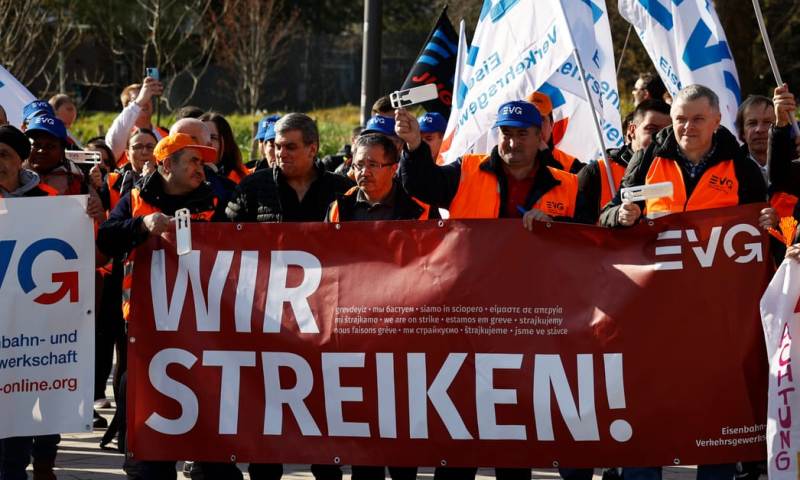
In the collective bargaining round of the negotations between terminals and unions in Germany, the Central Association of German Seaport Companies (ZDS) made a final offer to ver.di, the trade union representing the German port workers.
The offer includes two variants with different terms compared to the prevous offer.
The union will now launch a member survey to evaluate the offer. “Now it’s up to the members,” said ver.di negotiator Maren Ulbrich. “The ver.di Federal Collective Bargaining Commission has decided to present the offer to the members so that everyone can form their own opinion.”
The union noted that although the offer falls short of expectations, the ZDS has taken up some of the components demanded by ver.di, such as a fixed amount as a social component and an increase in shift allowances for the special stress of shift work.
The ver.di Federal Collective Bargaining Commission will decide how to proceed at its meeting on 22-23 August, based on the feedback from ver.di members.
In detail, the offer includes the following components:
- In variant 1, with a collective agreement term of twelve months, there would be a tax- and duty-free inflation compensation premium of €1,000 (part-time pro rata). On 1 January 2025, hourly wages would be increased by €0.95; at the same time, shift allowances would also be increased and annual holiday pay would rise by €48.
- In variant 2, with a collective agreement term of 16 months, there would be an inflation compensation premium of €1,400. On 1 January 2025, hourly wages would then rise by €1.15. In addition, shift allowances would increase and holiday pay would be increased as in variant 1.