
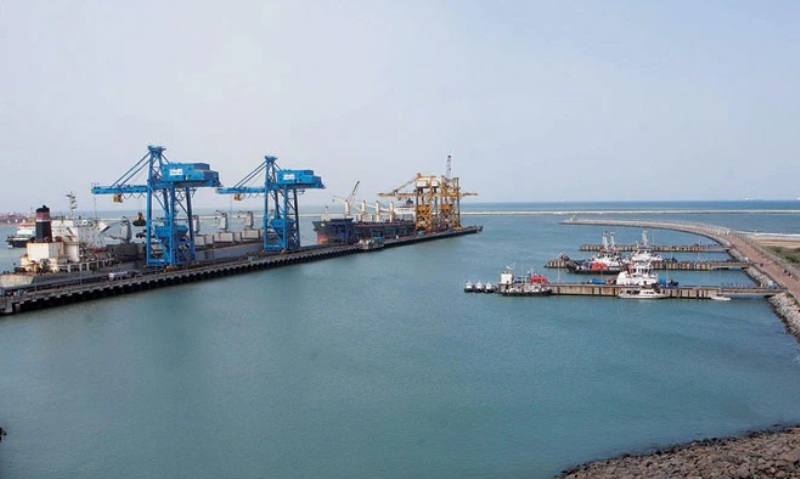
Kamarajar Port Limited (KPL) has invited bids for the development of its second container terminal at an estimated project cost of ₹4,288 crore under the public-private partnership (PPP) model, marking a major expansion of container-handling capacity at the port.
The terminal will be developed on a Design, Build, Finance, Operate and Transfer (DBFOT) basis, with the selected concessionaire operating the facility for a concession period of 40 years. The project is intended to cater to rising export-import (EXIM) and transshipment demand and strengthen Kamarajar Port’s position as a major container-handling hub on India’s east coast. KPL has listed the second container terminal project under its active PPP tenders.
The proposed facility will have a total annual handling capacity of 2 million TEUs, to be developed in two phases. Phase I, estimated to cost ₹2,429 crore, will provide capacity of 1.1 million TEUs. Phase II, involving an estimated investment of ₹1,858.94 crore, will add another 0.9 million TEUs.
The expansion is expected to enable Kamarajar Port to handle substantially higher container volumes and strengthen its ability to serve the growing industrial and manufacturing hinterland around Chennai and northern Tamil Nadu.
Kamarajar Port already has a container terminal developed under the PPP model. Its first container terminal was awarded through global bidding and has an installed capacity of 1.40 million TEUs per annum in two phases. The first phase, with 0.8 million TEUs capacity, commenced commercial operations in March 2018.
The second terminal is therefore expected to significantly expand the port’s overall container-handling capability and provide additional capacity to accommodate future growth in EXIM cargo.
The project also comes at a time when ports on India’s east coast are seeking to strengthen their role in regional container and transshipment trade. The proposed 2-million-TEU facility is expected to improve Kamarajar Port’s ability to compete for mainline and transshipment cargo and provide additional capacity for larger container vessels.
The port has already initiated the formal bidding process for the project, with the development structured as a long-term PPP concession. The project will be implemented by the private concessionaire, which will be responsible for financing, construction and operation of the terminal before its eventual transfer back to the port at the end of the concession period.
With the second container terminal, Kamarajar Port is positioning itself for a larger role in India’s container logistics network, while the additional capacity is expected to support the region’s expanding manufacturing, automotive and export-import ecosystem.