
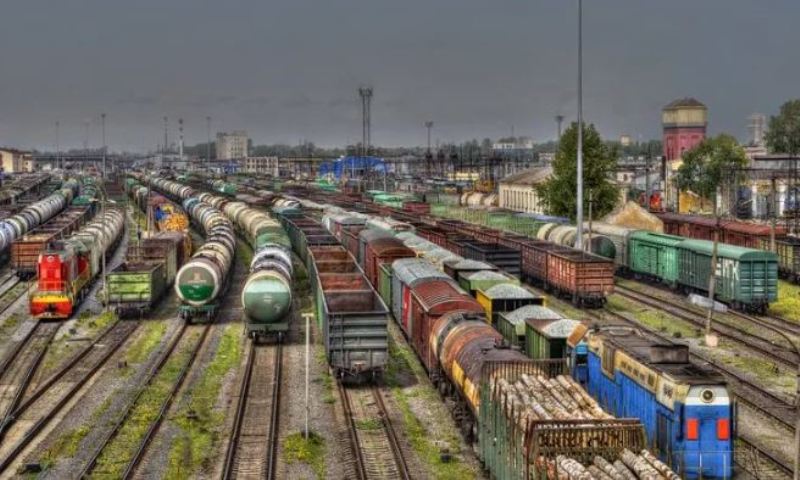
Russia is exploring the possibility of developing a direct rail connection to the Indian Ocean and onward access to India, as Moscow looks to diversify trade routes and reduce exposure to vulnerable maritime chokepoints such as the Strait of Hormuz and the Bosphorus.
Russian Deputy Prime Minister Marat Khusnullin said the feasibility of a rail route providing access to India should be examined. The proposed connectivity could run through Central and South Asia, creating an alternative overland pathway for trade between Russia and India.
Alternative to vulnerable sea routes
The proposal comes amid heightened concerns over disruptions to maritime trade through the Strait of Hormuz. The strategic waterway is a major route for energy and other cargo movements, and disruptions can increase transportation costs, insurance premiums and transit times.
For Russia, establishing additional land-based connections would reduce dependence on individual maritime corridors and provide greater flexibility when geopolitical tensions affect shipping routes.
Link with the North-South corridor
The proposed rail connection could complement the International North-South Transport Corridor (INSTC), a multimodal network designed to connect Russia with India through Iran and the South Caucasus. The INSTC is approximately 7,200 km long and combines rail, road and maritime links.
Greater use of rail and multimodal infrastructure could provide Russia and India with additional options for moving industrial goods, agricultural products, machinery and other cargo.
India could gain another trade option
For India, stronger rail connectivity with Russia could improve access to Russian and Central Asian markets while reducing reliance on maritime routes exposed to geopolitical disruption.
The initiative could also support India’s broader efforts to develop alternative trade corridors connecting the country with Central Asia, Russia and Europe. However, establishing a new direct rail route would require substantial infrastructure investment and coordination among several transit countries.
Long-term infrastructure challenge
The proposed rail link remains an idea to be explored rather than an operational project. Building a direct Russia–India rail connection would involve complex geography, multiple borders, differing railway systems and significant financing requirements.
Nevertheless, the proposal highlights Moscow’s growing focus on resilient overland trade networks. If developed alongside the INSTC and other regional corridors, improved rail connectivity could provide Russia and India with an additional logistics option as geopolitical risks continue to affect established maritime routes.