
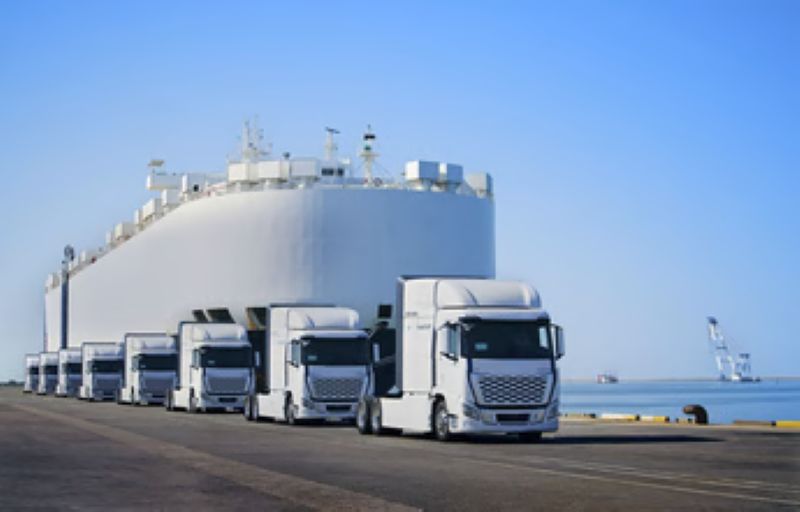
Hyundai has delivered eight Xcient hydrogen fuel cell heavy-duty trucks to a customer in Uruguay, marking a significant step in the country’s shift toward clean commercial mobility. The fleet departed from the Port of Gunsan in South Korea yesterday and will soon begin operations in Montevideo as part of the Kahirós project, an initiative designed to support green hydrogen–powered logistics.
The Kahirós project includes the development of a 2MW green hydrogen plant slated for completion in 2026. Hyundai’s local distributor, Fidocar, is a key member of the consortium driving the initiative, which aims to build a sustainable hydrogen ecosystem for Uruguay’s trucking sector.
Designed specifically for timber transport, each Xcient truck can run more than 720 km on 31 kg of hydrogen, enabling a full timber transport cycle on a single charge. Hyundai noted that this efficiency makes the trucks ideal for high-duty, repetitive hauling routes.
Hyundai’s Xcient fuel cell trucks are already in service across Switzerland, Germany, and the US for commercial freight operations. Earlier this year, two units were deployed by Edeka Nord in Germany for store deliveries across the northern region.
While global interest in hydrogen-powered mobility continues to rise, 2025 has also seen significant challenges for manufacturers relying solely on hydrogen technologies. Many fleet operators remain cautious about integrating hydrogen trucks into their logistics networks, and infrastructure developers are still seeking clearer commercial viability.
According to McKinsey, hydrogen trucks must achieve cost parity with diesel by 2030—requiring major reductions in vehicle prices and hydrogen fuel costs.
Hyundai’s Uruguay deployment showcases how strategically designed, localized logistics operations centered around green hydrogen hubs could pave the way for hydrogen trucking to gain early commercial traction.