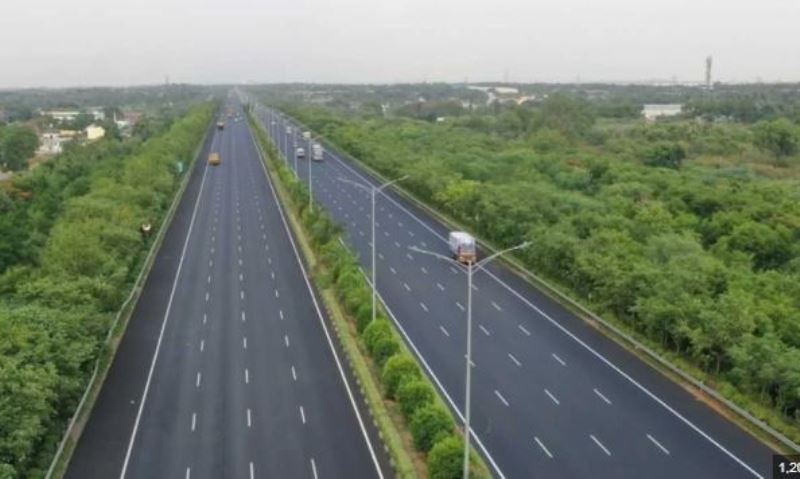
Maharashtra is set to see a major upgrade to its road infrastructure with the development of a 374-kilometre, six-lane, access-controlled greenfield highway connecting Nashik, Ahmednagar and Akkalkot. The new corridor will plug a critical gap between western and southern highway networks, significantly improving long-distance road connectivity.
Designed for high-speed and uninterrupted movement, the highway will allow average travel speeds of around 100 kmph, compared to about 60 kmph on existing routes. This is expected to sharply enhance both passenger travel and freight movement across multiple states.
Once operational, the corridor will cut Surat–Chennai road travel time from nearly 31 hours to about 17 hours, a reduction of around 45 per cent. Distances between key nodes such as Nashik and Solapur will also reduce, improving overall route efficiency.
For logistics firms and long-haul truck operators, the project is expected to result in faster deliveries, lower fuel consumption, reduced driver fatigue and improved vehicle utilisation.
The highway is projected to deliver wide-ranging economic benefits, including improved logistics efficiency across western and southern India, faster movement of industrial goods and agricultural produce, lower transportation costs, and better access to interior regions and industrial clusters. By offering an alternative high-capacity corridor, it is also expected to ease congestion on existing highways.
The project will be developed under the build-operate-transfer (BOT) model, attracting private investment alongside government support. Construction will be carried out in large segments, generating significant employment during the building phase and supporting long-term economic activity once operational. Land acquisition and preparatory work are already underway in several sections, indicating progress beyond the planning stage.
The Nashik–Ahmednagar–Akkalkot corridor forms part of India’s broader strategy to expand high-speed, access-controlled highways linking major economic zones, strengthening north-south and east-west connectivity and positioning road transport as a faster and more reliable option for long-distance travel.
