
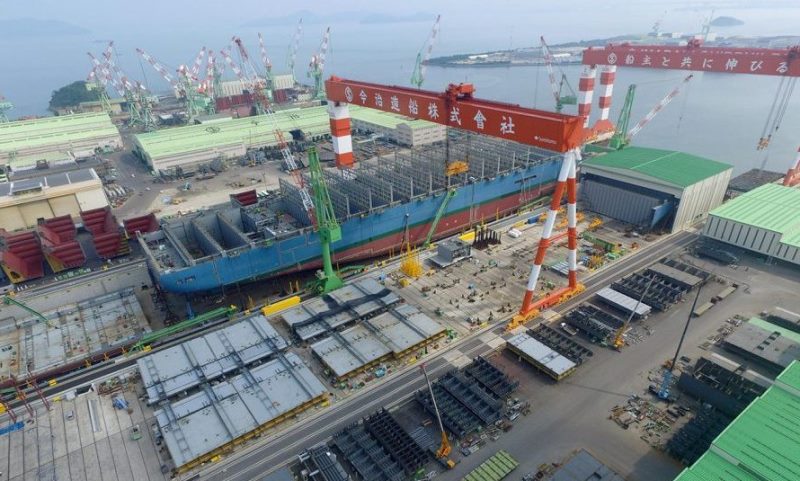
The global container shipping industry recorded an unprecedented surge in newbuilding activity in 2025, with owners booking a record number of container vessels and capacity, underlining confidence in long-term trade growth despite near-term market volatility.
Industry data shows that more than 600 container ships were contracted during the year, translating into over 5 million teu of new capacity. This marks the largest annual container ship ordering volume on record, surpassing the previous boom years seen during the pandemic-driven freight market upswing.
The ordering spree pushed the global container ship orderbook to around 10–11 million teu, equivalent to roughly 30–35% of the existing fleet, also an all-time high. Analysts note that while deliveries are spread over several years, the scale of the backlog will significantly reshape fleet composition through the second half of the decade.
Unlike earlier cycles dominated by ultra-large container vessels (ULCVs), 2025 orders were led by mid-sized and smaller ships, particularly vessels in the 5,000–15,000 teu range, alongside a sharp rise in feeder and regional tonnage. Owners are prioritising flexibility, network optimisation and the ability to redeploy vessels across multiple trades.
Asian shipyards dominated contracting, with Chinese builders securing the majority of new orders, followed by South Korean yards. The strong performance reflects competitive pricing, available slots and growing demand for technologically advanced designs.
A defining feature of the 2025 orderbook is the focus on alternative fuels and future-ready designs. Most new contracts specify dual-fuel capability, particularly methanol and LNG, as liners prepare for tightening emissions regulations and long-term decarbonisation targets.
Major liner operators and tonnage providers were active throughout the year, reinforcing expectations that container shipping will continue to expand structurally, even as the industry braces for potential overcapacity and freight rate pressure once the new vessels begin delivering.
In summary, 2025 stands out as a landmark year for container ship contracting, setting new records for both vessel numbers and capacity, and signalling a decisive shift toward greener, more flexible fleets in global liner shipping.