
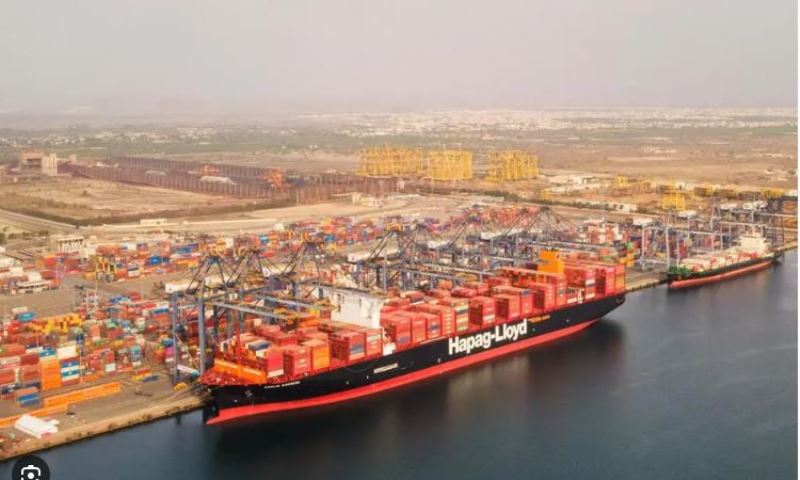
Hapag-Lloyd has introduced new requirements for transit shipments moving through Jeddah, Saudi Arabia, to Upper Gulf destinations, as the carrier tightens procedures for cargo moving onward to the United Arab Emirates, Kuwait, Qatar, Bahrain and Iraq.
The revised rules follow an update from Saudi Arabia’s Saudi Ports Authority (Mawani) allowing transit cargo to continue moving through Jeddah to Upper Gulf destinations, subject to customs, terminal, documentation and clearance requirements.
For containers discharged at Jeddah from August 1, 2026, customers are responsible for arranging customs clearance and onward transportation. The requirement applies from the arrival of Maersk Alette and subsequent vessels. Any costs arising from delays, storage, terminal handling, customs procedures or additional transportation will be charged to the shipper.
Hapag-Lloyd has also established stricter conditions for future bookings via Jeddah. The Notify Party must be based in Saudi Arabia, while a second Saudi-based Notify Party is required for “To Order” shipments. The Bill of Lading draft must also clearly state the applicable transit clause.
In addition, the payer must be located in Saudi Arabia, and the collecting office must be Hapag-Lloyd’s Saudi Arabia office. These requirements are intended to ensure that the cargo has the necessary local arrangements for customs clearance and onward movement.
A key new condition is a 15-day clearance and onward-movement deadline. Before accepting future bookings, Hapag-Lloyd will require a Letter of Indemnity (LOI) or written confirmation from the customer confirming that the shipment will be cleared and moved onward within 15 days of discharge at Jeddah.
Customers must also ensure that their Saudi-based Notify Party is capable of handling the required customs procedures. Applicable Saudi payments are to be completed through ODeX Saudi Arabia, while payments in the UAE and other Upper Gulf markets will continue through the existing local payment channels.
Delivery Orders will only be released once applicable payments have been settled. If cargo remains uncleared or onward movement is delayed, Hapag-Lloyd reserves the right to relocate containers to another operationally suitable location to prevent congestion at Jeddah, with resulting costs charged to the shipper.
The changes come as Jeddah has become an important alternative gateway for Upper Gulf cargo amid continuing uncertainty around Strait of Hormuz transits. Hapag-Lloyd has been using landbridge and third-party feeder solutions to connect Upper Gulf markets without requiring its vessels to transit the Strait of Hormuz.
The tighter requirements could increase the administrative burden on exporters, importers, freight forwarders and customs brokers using Jeddah as a transit gateway. Shippers will need to arrange Saudi-based parties, documentation and onward transportation in advance to avoid delays and additional costs.
The move highlights the operational challenges facing carriers as alternative Middle East routing options come under pressure. With Jeddah handling additional transit cargo, effective customs clearance and rapid evacuation of containers have become increasingly important to maintaining terminal fluidity.
For customers moving cargo to the Upper Gulf, Hapag-Lloyd’s revised rules mean that advance planning will be essential, particularly for shipments destined for UAE, Kuwait, Qatar, Bahrain and Iraq.